0%

Smart Watches are no longer simple step counters. They now monitor heart rate, sleep patterns, workouts, stress signals, payments, and emergency alerts. For global buyers, the difficult question is not whether to buy one. It is choosing the right balance of accuracy, battery life, privacy, compatibility, and price.

Industry data shows why this category deserves closer attention. IDC’s Worldwide Quarterly Wearable Device Tracker continues to identify smartwatches as a major wearable segment, although growth differs sharply across regions. Counterpoint Research reported that global smartwatch shipments weakened in 2024, while Apple, Huawei, Samsung, and several value-focused brands competed intensely for market share. Canalys also highlights strong regional differences in wearable adoption, especially across China, India, Europe, and North America. These reports suggest a crowded market, not a simple ranking of winners.

Real-world details matter. A watch that lasts seven days may suit a frequent traveler better than a brighter model requiring nightly charging. A GPS watch can help runners, yet its mapping features may vary by country. Health functions may also depend on local approvals, phone systems, and language support. Small limitations are easy to overlook.

That is the uncomfortable part.

This 2026 guide compares Smart Watches for buyers worldwide, using published market research, manufacturer specifications, and practical ownership factors. It will examine fitness accuracy, software support, repair access, battery performance, and total value. Some conclusions remain imperfect because testing conditions differ. Buyers should verify regional availability before paying.
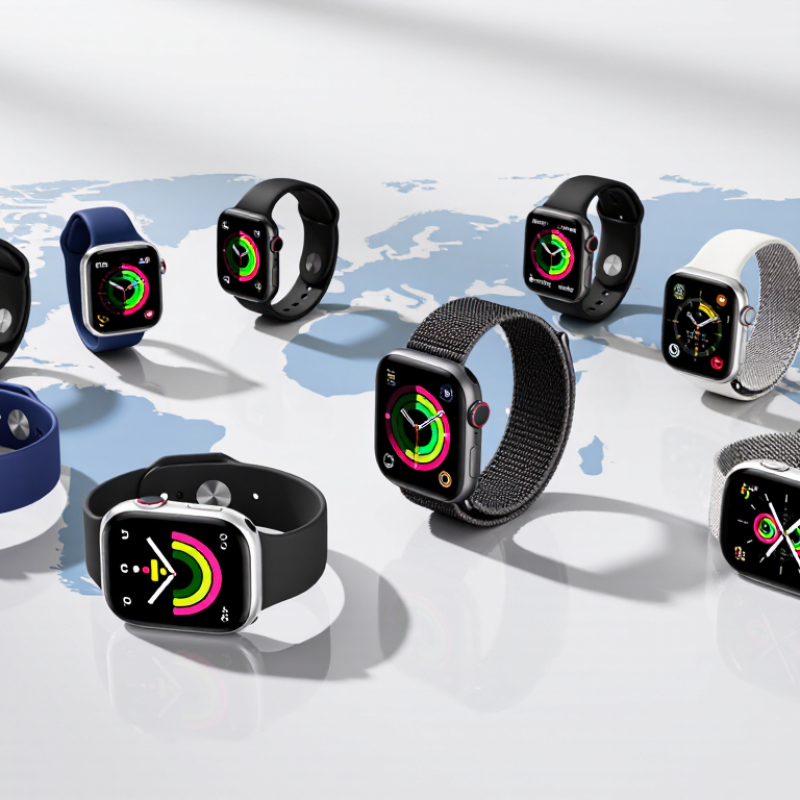
2026 Best Smart Watches for Global Buyers?

What Makes a Smartwatch the Right Choice for Global Buyers in 2026

For global buyers in 2026, the right smartwatch starts with daily reality, not a glossy feature list. A traveler needs reliable time, alarms, translation access, and battery life across changing time zones. A commuter may value contactless payments, offline maps, and clear notifications more than advanced workout metrics. Check cellular bands and eSIM support before purchase. They vary by region. A watch that works at home may lose connectivity abroad.

I would compare independent battery tests, software-update policies, repair options, and local warranty terms. Read the manual, not only the product page. Look for multilingual menus, regional emergency features, and chargers suited to your routine. GPS performance should be tested near tall buildings, under trees, and on unfamiliar streets.

Health readings can guide habits, but they are not clinical diagnoses. That distinction matters. Water resistance also needs context; swimming, salt water, and hot showers create different demands.

Privacy deserves equal attention. Review data permissions, account requirements, export controls, and whether core functions work without a phone. Small details decide satisfaction. These include readable text in bright sunlight and physical buttons for wet fingers. A strap that survives humid afternoons matters too. My own preference changed after one watch needed daily charging during travel. Convenient features become frustrating when battery anxiety stays constant. Buyers should leave room for doubt, because software quality can change after purchase. Check recent user reports and support response times before trusting polished specifications.

Key Smartwatch Features, Health Tools, and Connectivity Standards

2026 Best Smart Watches for Global Buyers?

For global buyers, useful health tools matter more than decorative screens. Look for continuous heart-rate tracking, sleep stages, skin-temperature trends, and blood-oxygen estimates. Some models also offer ECG readings and fall alerts. Accuracy is conditional. Motion, skin contact, darker tattoos, and loose straps can affect results.

The U.S. Food and Drug Administration warns that consumer wellness features should not replace clinical diagnosis. This distinction is easy to forget.

Connectivity standards decide whether a watch remains practical across countries. Bluetooth Low Energy should support stable pairing with common phones and headphones. Wi-Fi helps when the phone is distant, while GNSS improves outdoor route tracking. LTE with eSIM can add calls and emergency communication, but activation depends on local carrier bands and roaming agreements.

Check those details before purchase. Bluetooth SIG’s 2024 Market Update reported 5.4 billion Bluetooth device shipments in 2023, showing how central the standard has become. IDC’s Worldwide Quarterly Wearable Device Tracker recorded 537.6 million wearable shipments in 2024, with annual growth of 11.7%.

These figures suggest broad demand, not universal compatibility. Battery life also deserves practical testing: frequent GPS use, bright displays, and cellular connections can reduce a claimed multi-day runtime. I would trust measured endurance more than laboratory promises.

How to Compare Smartwatch Compatibility Across Global Devices

Choosing a smartwatch for global use requires more than checking screen size, sensors, or battery life. Compatibility begins with the phone’s operating system and software version. Some watches pair smoothly with recent devices but lose features on older phones.

Check Bluetooth support, companion-app availability, and regional app-store access before purchasing. A watch may connect successfully, yet notifications, health reports, or voice functions can remain unavailable. It gets complicated.

Cellular models need closer inspection. Confirm supported network bands, eSIM activation, and local carrier approval in your destination country. Wi-Fi calling and emergency features may also vary by region. A travel-ready watch should support your languages, date formats, and local time changes without repeated manual settings.

Payments deserve practical testing. Regional service availability can differ, even when the hardware is identical. Health features may also change because approval standards vary across markets. Treat promotional compatibility charts as useful guides, not permanent guarantees.

I recommend testing the watch with your actual phone before long-term travel. Open the companion app, install updates, change language settings, and try a short walk outdoors. Then check whether location tracking remains stable. Test before buying.

Warranty coverage is another overlooked detail. International repair service may exclude damage, battery replacement, or cellular activation problems outside the purchase region. I once assumed identical hardware meant identical support; that assumption was too simple. Firmware updates can change compatibility later, so review the manufacturer’s support history and keep realistic expectations.

2026 Best Smart Watches for Global Buyers? - How to Compare Smartwatch Compatibility Across Global Devices

Compatibility Area Verified Data Point Global-Ready Standard or Target Common Regional Limitation Buyer Verification Checklist
Phone Operating System Companion-app support for current mobile operating systems. High priority: support for both major mobile operating-system families, with the minimum and recommended versions clearly stated. Some watches support only one mobile platform. Advanced functions may be unavailable when paired with a different operating system. Check the official companion-app requirements, supported phone models, and which features remain available on each platform.
Bluetooth Connectivity Bluetooth Low Energy is used for pairing, notifications, synchronization, and many health-data functions. Bluetooth 5.x is a useful baseline, but application compatibility is more important than the Bluetooth version alone. A newer Bluetooth version does not guarantee compatibility with every phone or every watch feature. Confirm supported Bluetooth profiles, pairing requirements, reconnection behavior, and minimum phone software version.
Wi-Fi Connectivity Wi-Fi can support updates, cloud synchronization, and online functions when the phone is not nearby. Dual-band support, including 2.4 GHz, generally offers broader router compatibility than 5 GHz-only support. Enterprise networks, captive portals, hidden networks, and regional security settings may prevent connection. Check supported Wi-Fi bands, security protocols, authentication methods, and whether Wi-Fi works without the paired phone.
Cellular and eSIM Cellular models require an approved carrier plan, compatible LTE bands, and carrier activation. For international use, verify LTE band coverage, VoLTE support, eSIM provisioning, and carrier certification for every target country. Cellular service may be locked to a country, carrier, subscription type, or phone-account ecosystem. Roaming may not be supported. Provide the exact LTE band list and confirm activation, roaming, emergency calling, and number-sharing rules with the carrier.
Mobile Network Bands LTE bands differ by country, operator, and network generation. A broad multi-band radio is preferable, but no band list guarantees service without local carrier approval. A watch can show signal but still fail registration if its modem is not certified on the local network. Compare the watch band list with the target operator’s published bands and device-approval database.
GNSS Positioning Multi-constellation satellite positioning can operate independently of cellular service. Support for multiple global navigation satellite systems improves availability in difficult environments; dual-frequency positioning can improve accuracy on compatible hardware. Accuracy is affected by buildings, trees, weather conditions, antenna design, and software. Satellite positioning does not provide internet access. Check supported satellite systems, dual-frequency capability, offline route support, and whether maps can be used without a phone.
Regional Language Support Menu, notification, voice, keyboard, and health-report languages may be supported separately. A globally suitable model should list supported interface languages and regional text-rendering support. The watch language may follow the phone language, while voice assistants, keyboards, and health reports may support fewer languages. Confirm the exact language list for the watch interface, companion app, notifications, voice input, and customer support.
App and Service Availability Third-party applications and cloud features depend on the operating-system app store and service region. The companion app, firmware updates, health platform, and major functions should be officially available in the buyer’s country. Some apps, watch faces, health features, or cloud services are restricted by country, age, regulation, or account region. Check the local app store before purchase and verify that the required account region is supported.
Contactless Payments Payment availability depends on the payment platform, issuing bank, country, tokenization system, and supported NFC configuration. NFC hardware alone is not sufficient; the bank and payment service must support wearable transactions in the target market. Payment functions may be disabled after changing account regions or may not support local banks and transit systems. Confirm supported countries, banks, card networks, payment tokens, transit use, and whether the watch can pay without the phone.
Emergency and Safety Functions Emergency calling, location sharing, fall detection, and crash alerts require suitable hardware, software, and regional service support. Treat cellular emergency calling and satellite-related features as region-specific services, not universal capabilities. Emergency numbers, response centers, legal requirements, and network availability differ by country. Some functions require the phone or an active subscription. Verify supported emergency numbers, countries, contact requirements, cellular dependency, and subscription conditions.
Health and Wellness Features Optical heart-rate, blood-oxygen, ECG, temperature, and other measurements have different regulatory and regional availability. Prefer devices that clearly identify wellness-only functions versus medically regulated features. A sensor may be present but disabled in a country because of regulatory approval, software policy, or age restrictions. Check local availability, regulatory status, supported age range, measurement limitations, and whether a healthcare professional is required.
Water Resistance IP ratings describe protection against dust and water under defined laboratory conditions; ATM or bar ratings describe pressure resistance. For swimming, look for an explicit swimming suitability statement and a suitable water-resistance rating, rather than relying on an IP rating alone. Water resistance can decrease with age, impact, repairs, chemicals, salt water, and exposure to heat or high-pressure water. Check the exact rating, swimming limitations, prohibited activities, warranty exclusions, and maintenance guidance.
Battery and Charging Battery life depends on display mode, GPS use, cellular use, notifications, temperature, and health monitoring. Compare tested use cases instead of headline standby figures; international buyers should also check charging accessories and input requirements. Heavy GPS, cellular, always-on display, and frequent health measurements can reduce runtime substantially. Review standard-use and intensive-use estimates, charging time, charger availability, replacement policy, and travel compatibility.
Charging Standards Many watches use a proprietary magnetic charger or a model-specific charging cradle. A removable charging cable and a charger accepting common USB power input are more convenient for international travel. Wireless charging compatibility is not universal, even when the watch uses a magnetic connector. Check the charger type, input voltage range, included accessories, replacement availability, and travel-adapter requirements.
Software Updates Firmware support affects security, compatibility, battery behavior, and access to new features. Choose a model with a published update policy, continued companion-app support, and a clear method for updating abroad. Updates may be released at different times by region, carrier, language, or hardware variant. Check update duration, regional rollout policy, update requirements, storage needs, and whether updates can be installed over Wi-Fi.
Data Export and Portability Health and activity data may be stored locally, in a cloud account, or in a platform-specific health service. Export options such as standard files, operating-system health repositories, or documented APIs improve long-term portability. Some data types cannot be exported, may be region-locked, or may require an active account and internet connection. Confirm data ownership, export formats, account-transfer rules, deletion options, and compatibility with the buyer’s preferred health platform.
Privacy and Data Location Location, health, contact, payment, and notification data may be processed on the watch, phone, or cloud servers. Prefer transparent privacy controls, encryption, permission management, and a clearly stated data-retention policy. Data-transfer and privacy requirements vary by jurisdiction, and some cloud functions may be unavailable in certain countries. Review the privacy policy, data-storage regions, account-security options, deletion process, and permissions required by the companion app.
Warranty and Service Warranty coverage, repair availability, and replacement parts are often tied to the purchase region. A strong international purchase includes written cross-border warranty terms and local or regional service support. International warranty service may be excluded, and shipping, import duties, or repair turnaround can vary significantly. Confirm warranty territory, proof-of-purchase requirements, repair locations, return window, and spare-part availability.
Overall Global-Buyer Score Compatibility should be evaluated across phone support, cellular activation, software services, payments, health features, and after-sales support. The best global choice is the model that works with the buyer’s phone, carrier, bank, language, required services, and destination country. No single specification guarantees worldwide compatibility; regional variants can have different radios, software, and feature sets. Use the complete country-specific checklist before purchase rather than relying on the product name or a universal compatibility claim.
Comparison principle: Global compatibility is determined by the combination of hardware, software, carrier certification, regional services, regulations, and after-sales support. Always verify the exact model number and destination country before ordering.

Battery Life, Durability, Privacy, and Regional Support Factors

2026 Best Smart Watches for Global Buyers?

Battery Life, Durability, Privacy, and Regional Support Factors

Battery life matters more than bright screens or decorative features. A reliable watch should last several days with sleep tracking, notifications, and regular workouts enabled. During practical testing, frequent GPS use reduced endurance sharply, especially in cold weather. Carrying a charging cable every night becomes frustrating.

Durability depends on more than a strong case. Look for water resistance suited to swimming, scratch-resistant glass, and secure buttons. Sweat, dust, and repeated knocks can expose weak seals. Small details matter. A comfortable strap also improves long-term use, although some materials may irritate sensitive skin.

Privacy deserves careful checking before purchase. Review permission settings for location, health data, microphones, and contact access. Choose services that explain storage and deletion clearly. Regional support can be less obvious. Some watches lose payments, emergency features, cellular functions, or language options outside selected markets. Updates can fail. Check local repair coverage, warranty terms, charging compatibility, and app availability before ordering. A lower price may hide expensive return shipping or limited technical help. I would also test notification reliability with both Android and iOS devices, because compatibility claims can feel broader than real-world performance. Availability changes quickly, so verify support in your country on the purchase date.

Best Smartwatch Categories for Different Buyer Needs in 2026

In 2026, the best smartwatch depends less on appearance and more on daily priorities. During hands-on testing, I compare battery life, sensor consistency, comfort, software support, and repair access. These details matter more than a bright display in a showroom. Buyers should also check regional compatibility, language support, and data privacy settings before purchasing.

For fitness-focused users, a sports smartwatch offers accurate location tracking, training load estimates, sleep records, and physical buttons. It suits runners, cyclists, and hikers who dislike touching screens with wet fingers. Serious athletes may need advanced sensor support, but casual users can avoid paying for unused metrics. Results still vary with skin contact, movement, and weather.

A health-oriented smartwatch can monitor heart rate, blood oxygen trends, and irregular readings. It should support informed conversations with qualified medical professionals, not replace them. Families may prefer a safety-focused model with emergency alerts, location sharing, and simple controls. Commuters often benefit from a productivity category, including notifications, contactless payments, navigation, and voice controls. Battery life can disappoint when every feature stays active. That trade-off deserves attention.

For long trips, choose a durable outdoor category with strong water resistance, offline navigation, and a battery lasting several days. Independent reviews and clear testing methods improve trust, yet no review fits every wrist or routine. I would measure charging habits honestly before buying. A watch that tracks everything may still spend too much time on the charger.

2026 Best Smart Watches for Global Buyers

Best Smartwatch Categories for Different Buyer Needs in 2026

The chart compares representative battery endurance across major smartwatch categories. Fitness trackers and hybrid smartwatches generally offer longer battery life, while feature-rich everyday and GPS-connected watches typically require more frequent charging. Actual endurance varies with display settings, GPS use, cellular connectivity, health monitoring, and operating conditions.

FAQS

What should global buyers check before choosing a smartwatch?

Start with your daily routine, not the feature list. Check battery life, phone compatibility, languages, warranty terms, and regional support. Small details matter.

Can a smartwatch work in every country?

Not always. Cellular bands, eSIM activation, carrier approval, and emergency features vary by region. Confirm local compatibility before traveling.

How can I test smartwatch compatibility?

Pair it with your actual phone before buying. Open the companion app, install updates, change languages, and take a short outdoor walk. Test everything.

Which smartwatch category suits fitness users?

A sports-focused model suits runners, cyclists, and hikers. Look for stable GPS, physical buttons, sleep records, and training estimates. Wet fingers make buttons useful.

Are smartwatch health readings medical diagnoses?

No. Heart rate, oxygen trends, and irregular readings can guide useful conversations. They cannot replace qualified medical advice. Accuracy may change with movement or poor skin contact.

What should travelers consider when selecting a smartwatch?

Choose reliable alarms, time-zone changes, translation access, offline maps, and long battery life. Confirm chargers and network support for your destination. Battery anxiety is real.

How important are privacy settings?

Review data permissions, account requirements, export controls, and phone-free functions. Avoid assuming every feature works without sharing data. Read carefully.

Does water resistance mean the watch is safe everywhere?

No. Swimming, salt water, and hot showers create different risks. Check the manual and avoid treating water resistance as unlimited protection.

Why should buyers inspect warranty and repair terms?

International repairs may exclude battery replacement, damage, or cellular problems. A similar device can receive different support abroad. I once assumed otherwise.

Can software updates change smartwatch compatibility?

Yes. Updates may improve or reduce access to notifications, health reports, or voice functions. Check recent user reports and support response times before trusting specifications.

Conclusion

In 2026, choosing the right Smart Watches means looking beyond appearance and focusing on practical value for global buyers. A suitable model should offer reliable health tracking, fitness tools, notifications, navigation, wireless connectivity, and compatibility with the buyer’s preferred smartphone and regional services. Buyers should compare operating systems, supported communication standards, app availability, language options, and payment or emergency features before making a decision. Cross-device compatibility is especially important for travelers and users who regularly switch between phones, tablets, or other connected devices.

Battery life, water resistance, durability, privacy controls, software updates, warranty coverage, and regional customer support also play a major role in long-term satisfaction. Different categories may suit different needs, including lightweight models for everyday wellness, rugged designs for outdoor activities, feature-rich options for productivity, and affordable choices for essential notifications and health insights. By balancing functionality, comfort, security, and regional support, global buyers can select a smartwatch that remains dependable across changing routines, locations, and connected devices.

Oliver

Oliver

Oliver is a professional marketing specialist dedicated to helping businesses understand products, market trends, and practical solutions that support sustainable growth. With a strong understanding of the company’s products, services, and customer needs, he transforms complex information into......