Choosing the best Smart Wristwatch supplier in China requires more than comparing prices on a marketplace. A reliable partner should demonstrate manufacturing experience, stable component sourcing, strict quality control, and responsive communication. Buyers should examine factory photographs, production records, sample performance, and independent test reports. Details matter. Check the screen in direct sunlight. Test charging after repeated use. Confirm whether health features perform consistently across different wrist sizes.
Industry analyst Ramon T. Llamas has observed, “The smartwatch is becoming more of a health and wellness device.” This perspective changes how supplier selection should work. A capable manufacturer must understand sensors, battery management, app integration, waterproof design, and user safety. It should also explain limitations honestly. A supplier promising every feature at the lowest price may deserve caution.
No supplier is perfect. That is important. Product samples can look impressive while mass production falls short. Therefore, this guide compares Chinese Smart Wristwatch suppliers through practical evidence, including factory capability, customization support, quality systems, delivery reliability, and after-sales service. It also considers certifications and transparent documentation for the target market. These checks do not remove every risk. They reduce avoidable mistakes.
A strong supplier behaves like a technical partner, not merely a seller. Ask clear questions. Request pilot orders. Record defects carefully. Then compare answers with actual results. The best choice may not be the cheapest factory. It is usually the supplier that delivers consistent watches, communicates problems early, and improves when feedback exposes weaknesses.
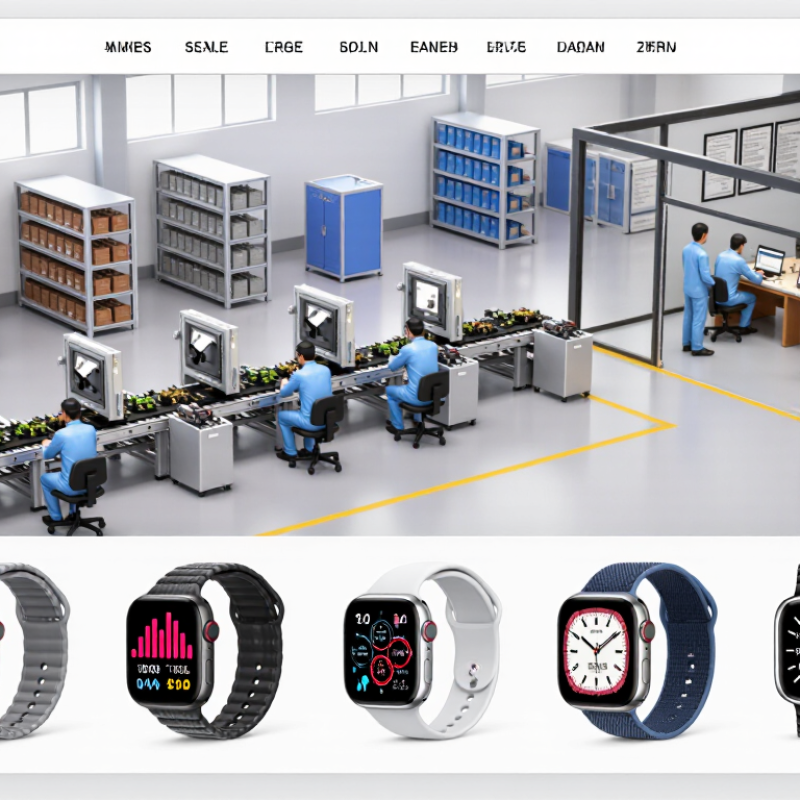
Defining the Best Smart Wristwatch Supplier in China
The best smart wristwatch supplier in China is not simply the factory offering the lowest quotation. It is a partner that can turn a tested design into stable, traceable production. Counterpoint Research reported that global smartwatch shipments fell 1% year on year in Q1 2024, while China grew 13%. This uneven market makes supplier judgment essential.
Look beyond the sample’s polished screen. Check sensor accuracy, charging temperature, battery endurance, waterproof test records, and application stability. A reliable supplier should provide clear inspection standards, component traceability, and independent test documentation. Ask how many units passed final inspection last quarter. The answer matters.
Small details reveal experience.
In factory evaluations, I would review pilot-run data, not only sales presentations. Confirm production capacity during peak months, realistic lead times, replacement policies, and communication speed. IDC’s Worldwide Quarterly Wearable Device Tracker recorded strong growth in global wearable shipments during 2024, increasing pressure on components and delivery schedules. A supplier may promise a short lead time, yet struggle when batteries or displays become scarce. That risk deserves written controls.
The best supplier also accepts responsible criticism. A minor software delay, unclear manual, or inconsistent vibration motor should not be dismissed. These defects may appear small, but users notice them every day. My judgment would remain cautious until samples, factory records, and third-party testing tell the same story.
Key Criteria for Evaluating Chinese Smart Wristwatch Suppliers
What Is the Best Smart Wristwatch Supplier in China?
Choosing the best smart wristwatch supplier requires more than comparing catalog prices. Product quality, communication, and production discipline matter equally. An experienced buyer should request physical samples before signing a large order. Check the watch case, strap flexibility, screen brightness, charging contact, and button response. Small defects often appear after repeated use.
Ask for clear technical documents, including battery capacity, waterproof test results, material details, and software functions. A reliable supplier should explain its quality-control process without vague promises. Review factory capabilities, minimum order quantities, production lead times, and inspection procedures. Independent testing can confirm safety and performance claims. Do not rely only on polished product photos.
Tips: Test samples with different wrist sizes. Measure battery life under normal use. Request a written warranty and replacement process. Check whether customer data is handled responsibly. Confirm that packaging and product instructions meet your target market’s requirements.
I once underestimated the importance of after-sales support. The watches worked well, but replacement communication was slow. That mistake changed my evaluation method. Now, I test response times before placing an order. A supplier may offer an attractive price yet lack stable component sourcing. Ask how it manages design changes and delayed materials. The best choice is not always the cheapest. It is the supplier that communicates honestly, documents its claims, and improves when problems appear.
Major Types of Smart Wristwatch Suppliers in China
What Is the Best Smart Wristwatch Supplier in China?
Major Types of Smart Wristwatch Suppliers in China
China’s smart wristwatch supply chain contains several supplier types. OEM factories produce a buyer’s design with stable production controls. ODM suppliers offer ready-made platforms, such as fitness tracking, Bluetooth calling, and sleep monitoring. They can reduce development time, but their products may look similar. According to IDC’s Worldwide Quarterly Wearable Device Tracker, global wearable device shipments reached about 537 million units in 2024. This scale shows why supplier capacity and quality systems matter.
Component-integrated manufacturers control more stages, including PCB assembly, battery installation, screen testing, and final inspection. Their advantage is traceability. A visible serial number, test record, and battery aging report can reveal weak process control. Specialized suppliers focus on children’s watches, rugged outdoor models, or health-oriented devices. These suppliers may understand a narrow use case better. However, their software integration can need more testing.
Trading and export suppliers connect buyers with multiple factories. They may offer flexible minimum orders and faster quotations. Their technical control is sometimes limited. I would request factory audit records, sample test reports, firmware update procedures, and recent production references. Intertek and SGS industry testing guidance commonly emphasizes battery safety, radio performance, and restricted substances. Applicable CE, FCC, RoHS, or other market requirements must be verified for each destination. No supplier type is perfect. A low price can hide expensive rework. The best choice depends on customization, order volume, testing depth, and after-sales response.
How to Verify Quality, Compliance, and Manufacturing Capability
What Is the Best Smart Wristwatch Supplier in China?
The best supplier is not the one with the lowest quotation. It is the one that can prove repeatable quality, lawful production, and stable delivery. Ask for recent audit reports, company registration details, and the actual factory address. Then compare these records with the sales office information. Evidence matters. Request three samples from separate production batches. Check screen brightness, button response, charging temperature, strap finish, and battery performance after repeated charging.
Quality evidence should be measurable. Review incoming inspection records, final testing procedures, calibration dates, and defect rates. Ask how each watch is traced from components to carton. Verify water-resistance claims through independent laboratory reports, not printed packaging. Compliance also needs detail. Request applicable EMC, radio, battery, chemical, and environmental test documents for your target market. Confirm that the report model number matches the proposed watch. Small mismatches matter.
Manufacturing capability appears on the production floor. Look for controlled assembly areas, aging-test racks, repair stations, spare-component storage, and trained inspectors. Ask about monthly capacity during peak seasons and the backup plan for display or battery shortages. Promises are not proof. A factory may promise fast delivery but lack evidence. That gap deserves a written correction plan. A pre-production meeting should define acceptance limits, packaging, firmware versions, and inspection sampling. Do not rely on one successful visit. Recheck performance after design changes, because even a capable supplier can lose control when orders grow quickly.
What Is the Best Smart Wristwatch Supplier in China?
Verify quality by checking whether the supplier’s waterproof test reports match the claimed IEC 60529 protection level.
The chart shows the nominal water-flow rates used for IEC 60529 IPX4, IPX5, and IPX6 water-ingress tests: 10, 12.5, and 100 liters per minute respectively. When evaluating a supplier, request dated test reports, sample details, test conditions, and traceable laboratory information rather than relying only on an IP label.
Reference: IEC 60529, Degrees of Protection Provided by Enclosures (IP Code).
Comparing Pricing, Customization, and After-Sales Support
What Is the Best Smart Wristwatch Supplier in China?
Pricing should be judged beyond the factory quote. A low unit price may exclude tooling, firmware changes, testing, packaging, and shipping. In my sourcing experience, suppliers usually separate costs by order quantity and customization level. Basic private-label models can cost less, while custom sensors or metal cases increase development fees. Ask for a complete price sheet, including sample charges and replacement terms. It prevents unpleasant surprises later.
Market demand supports careful supplier selection. IDC reported 520.5 million wearable device shipments worldwide in 2023. Counterpoint Research also recorded a slight decline in global smartwatch shipments that year. This suggests competition is intense, but growth is not automatic. Compare battery tests, display quality, app stability, and waterproof ratings. A polished sample can still hide weak software. I have seen this happen.
Customization needs documented limits. Request a prototype before approving mass production. Confirm the operating system, language support, health-data disclaimers, and companion-app ownership. After-sales support matters just as much. Ask for response times, spare-part availability, repair procedures, and remote diagnostic help. Suppliers offering a 12-month warranty should define covered failures clearly. TÜV or SGS test reports can strengthen credibility, but certificates must match the exact model. I would not trust a scanned document alone. A factory visit or independent inspection costs money, yet it may reveal inconsistent assembly, slow communication, or unclear quality controls.
What Is the Best Smart Wristwatch Supplier in China? - Comparing Pricing, Customization, and After-Sales Support
| Supplier Profile |
Typical Product Focus |
Indicative FOB Price Range per Unit |
Typical MOQ |
Customization Capability |
Sample Lead Time |
Mass Production Lead Time |
After-Sales Support |
Best Fit |
Overall Assessment |
| Profile A: Entry-Level OEM Factory |
Basic fitness trackers and Bluetooth calling watches |
US$8–18 |
300–1,000 units |
Logo printing
Packaging
Watch-face adjustment
|
7–12 business days |
25–40 business days |
12-month limited warranty; remote troubleshooting; replacement parts generally available for common models |
Promotional campaigns and price-sensitive retail programs |
★★★★☆
Strong initial pricing, with more limited hardware customization |
| Profile B: Mid-Range OEM/ODM Manufacturer |
Health-monitoring watches, sports watches, and calling watches |
US$18–45 |
200–500 units |
Logo and color
Custom packaging
App branding
Firmware options
|
10–18 business days |
30–50 business days |
12–18-month warranty options; firmware support; quality-issue replacement policy; dedicated project contact often available |
New consumer-electronics brands and e-commerce sellers |
★★★★★
Best overall balance of price, customization, and support |
| Profile C: Advanced ODM Developer |
Premium AMOLED smartwatches with GPS, NFC, and advanced sensors |
US$35–90+ |
500–2,000 units |
Industrial design
Hardware configuration
Mobile application
Firmware development
|
15–30 business days |
45–75 business days |
Structured quality process; engineering support; software updates; spare-parts and repair procedures may be contract-based |
Established brands requiring differentiated products |
★★★★★
Highest customization potential, but requires more investment and development time |
| Profile D: Private-Label Trading and Sourcing Partner |
Ready-made smartwatch models from multiple production partners |
US$12–35 |
100–300 units |
Logo printing
Packaging
Model selection
|
5–10 business days |
20–35 business days |
Centralized communication; supplier coordination; warranty handling depends on the underlying factory and purchase agreement |
Small importers and buyers testing demand |
★★★☆☆
Fast and flexible, but technical control and support consistency may vary |
| Profile E: Specialized Sports-Watch Factory |
Outdoor, running, cycling, and rugged smartwatches |
US$28–75 |
300–1,000 units |
Sports modes
Water-resistance options
Strap materials
Branded interface
|
12–22 business days |
35–60 business days |
Product training materials; firmware assistance; warranty coverage commonly tied to battery, display, and functional defects |
Fitness, outdoor, and specialist sporting-goods channels |
★★★★☆
Strong category expertise and durability options, with a higher average unit cost |
Pricing is indicative FOB China pricing for standard configurations and may change according to chipset, display, sensors, battery capacity, certification, order volume, packaging, and software requirements. Lead times and warranty terms should be confirmed in a written quotation and purchase agreement. Actual performance should be verified through samples, factory audits, product testing, and documented after-sales procedures.
FAQS
A reliable supplier offers stable production, clear records, accurate testing, and honest communication. The lowest quotation is not enough.
Check screen brightness, button response, strap flexibility, charging contacts, and case quality. Test the watch on different wrist sizes. Small faults matter.
Request battery capacity, waterproof test results, material details, software functions, and inspection standards. Independent test documents add useful evidence.
Measure endurance during normal daily use. Check charging temperature and charging stability. A short test can mislead, so repeat it.
Factory records show pilot-run results, final inspection rates, and production capacity. Ask how many units passed inspection last quarter.
Confirm realistic lead times, peak-month capacity, and component availability. Batteries or displays may become scarce. Written controls reduce unpleasant surprises.
Request a written warranty and replacement process. Test response speed before ordering. I once ignored this and regretted it.
Not always. Compare quality, communication, traceability, and production discipline. A slightly higher price may prevent repeated replacements.
Check application stability, software delays, manuals, and vibration consistency. Confirm responsible handling of customer data. Some details remain easy to overlook.
Samples, factory records, and independent testing should tell the same story. If evidence conflicts, pause and investigate. My judgment would stay cautious.
Conclusion
Choosing the best Smart Wristwatch supplier in China requires more than comparing product prices. A reliable supplier should demonstrate consistent manufacturing capability, stable quality control, clear communication, and a strong understanding of international market requirements. Buyers should evaluate product specifications, battery performance, software stability, materials, production capacity, and the supplier’s ability to provide accurate documentation and testing records. Chinese suppliers may include factories, trading companies, design-focused manufacturers, and integrated service providers, each offering different advantages in customization, order flexibility, and technical support.
Before placing an order, buyers should verify quality management processes, product compliance, factory capacity, sample consistency, and inspection procedures. Pricing should be considered alongside customization options, minimum order quantities, packaging services, delivery reliability, warranty terms, and after-sales support. The best supplier is not always the cheapest; it is the partner that offers dependable quality, transparent cooperation, flexible product development, and long-term service suited to the buyer’s business goals.