China’s smartwatch industry includes established electronics groups, specialist wearable brands, and OEM/ODM factories serving international buyers. Their products range from simple step counters to connected watches with AMOLED displays, GPS, and health-tracking features. A Digital Smart Watch may look impressive in a product photo. Daily performance depends on details users notice: outdoor screen brightness, strap comfort, charging time, and reliable phone pairing. Small things matter.
This guide introduces ten Chinese manufacturers and compares their typical strengths in design, production capability, customization, and product range. It is intended to help importers, retailers, and technology teams build a practical shortlist—not to declare one universal winner. The overview also considers how clearly companies describe their products, support different order volumes, and communicate with potential partners. These points can affect a project as much as a long feature list.
Specifications and services can vary between models, factories, and production runs, so buyers should verify current details directly with each supplier. A polished catalog is not proof of long-term durability. Ask for samples, check compatibility with target phones, and clarify testing and after-sales arrangements before making commitments. No shortlist is perfect. Company information changes, and a manufacturer suited to one market may not fit another. This comparison offers a starting point, with practical questions worth considering before the next step.
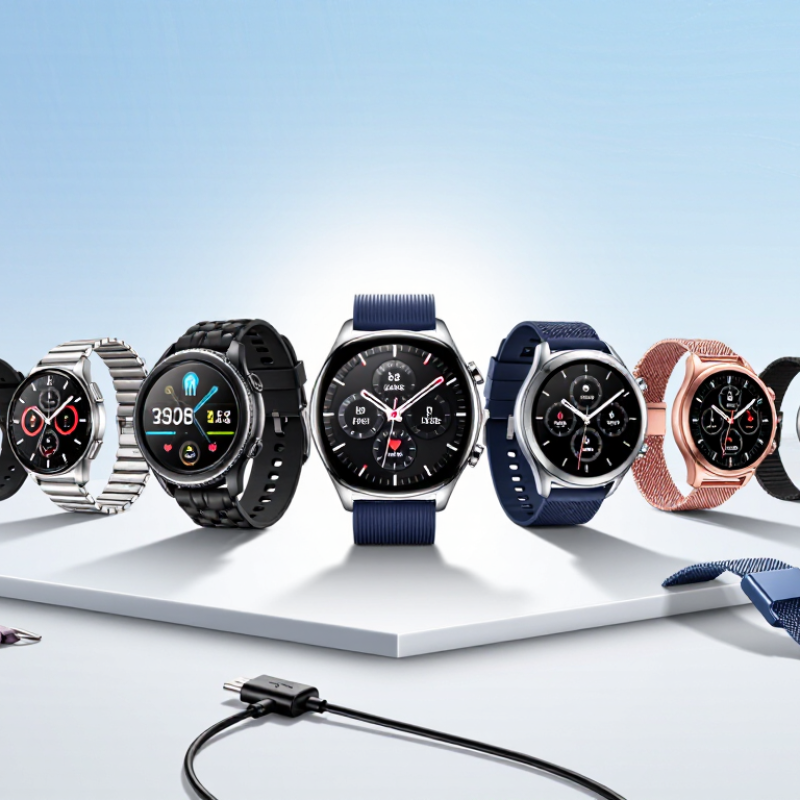
Definition and Scope of China’s Digital Smartwatch Manufacturing Industry
China’s digital smartwatch manufacturing industry covers the design, component sourcing, assembly, testing, and production support of wrist-worn electronic devices. These products typically combine a display, processor, sensors, battery, and wireless connections. Some also include GPS, health-tracking functions, or companion software. The scope is broader than final assembly alone. It includes suppliers and contractors that contribute essential parts or services. This distinction matters.
A production chain may begin with circuit boards, screens, batteries, straps, and sensor modules. These parts are assembled and checked for functions such as charging, touch response, connectivity, and timekeeping. Quality procedures differ by product and factory. Testing can reveal problems, but it cannot guarantee identical performance in every use. Details vary.
For industry research, “manufacturer” may refer to an original design producer, an assembly contractor, or a company coordinating several suppliers. These roles are not interchangeable, and public descriptions can leave them unclear. Buyers should examine production capabilities, quality documentation, customization options, and after-sales arrangements. A factory’s capacity alone says little about reliability. The category also changes as devices gain new sensors and software features, so a fixed definition can miss meaningful differences.
FAQS
It has moved beyond basic assembly toward integrated product development. Factories coordinate compact circuit boards, processors, displays, and sensors.
Optical heart-rate sensors need steady wrist contact. Motion sensors must distinguish routine movement from exercise. More features do not guarantee accurate readings.
Automated placement equipment handles tiny components. Inspection stations can catch soldering defects before final assembly.
Ask about battery performance, screen response, and water resistance tests. Finished-device results are more useful than component specifications alone.
A clear interface may still feel slow if notifications arrive late. That detail is easy to overlook.
Compare sensor calibration, battery management, water resistance, and support for design changes. Public information may be uneven.
Inspect the strap, button feel, screen visibility, and charging fit. Small changes matter.
Not always. Rankings may overlook smaller specialists, so check testing details and production capabilities directly.
Conclusion
This article explores the scope of China’s Digital Smart Watch manufacturing industry, from product design and component sourcing to assembly, testing, and distribution. It outlines how advances in sensors, connectivity, power management, software integration, and production automation have expanded the capabilities of smartwatches and enabled manufacturers to serve a wider range of users and applications.
To assess leading manufacturers, the article considers factors such as engineering expertise, product quality, customization options, production capacity, and international market experience. It then presents profiles of ten manufacturers without focusing on brand promotion, highlighting their different areas of specialization. A final comparison examines product categories, manufacturing strengths, and market reach, helping readers understand how suppliers vary and what considerations may matter when evaluating potential partners.