0%

Choosing a Sport Smart Watch is less about buying the model with the longest feature list and more about finding tools that suit your training. Your needs matter. A runner checking pace on a rainy path needs different information from a swimmer tracking laps or a cyclist navigating hills. Start with your sport, then consider fit, battery life, GPS accuracy, water resistance, and screen readability in bright sunlight. Small details count.

Sports scientist and wearable-data researcher Dr. Marco Altini describes heart-rate variability as “the measure of the variation in time between consecutive heartbeats.” This metric can add context to recovery, but it should not diagnose illness or replace professional advice. Numbers are clues, not verdicts. Compare how watches record workouts, sync with your phone, and present results afterward. Check whether the controls work with sweaty hands and whether the strap stays comfortable through a full session.

A useful choice also depends on budget, phone compatibility, and the data you will actually review. Some advanced features may look impressive yet go unused. That is worth admitting: more measurements do not automatically mean better training. This guide explores essential features, sport-specific needs, comfort, accuracy, and common trade-offs. It also considers how to test a watch before relying on it. The best fit may not be the newest or most expensive model. It should make useful information easy to understand, without distracting you from the workout.
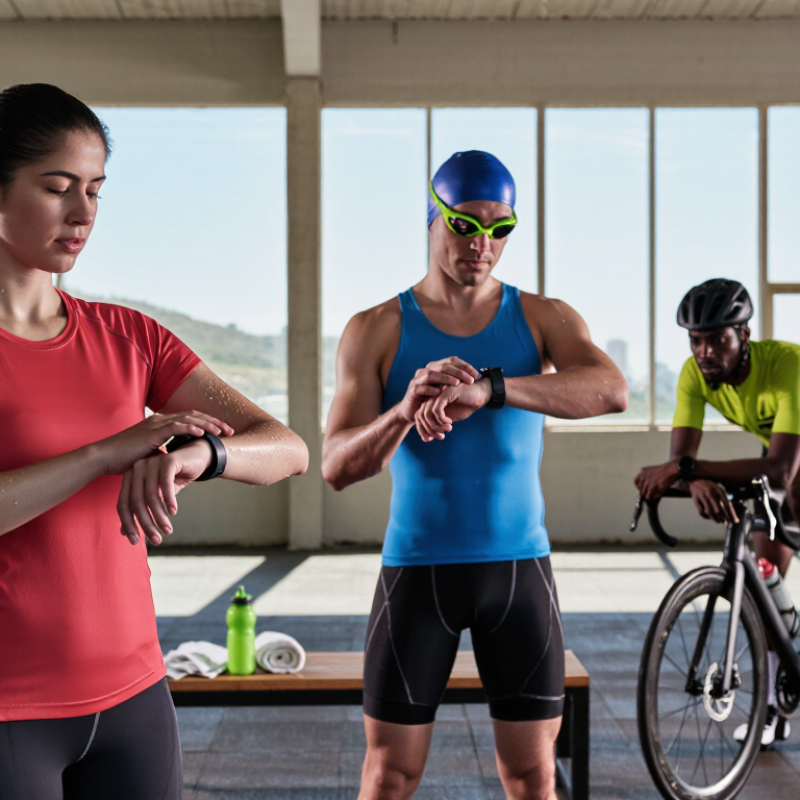
How to Choose the Best Sport Smart Watch for Your Needs

Define Your Training Goals: WHO Recommends 150–300 Weekly Minutes of Moderate Activity

WHO recommends that adults complete 150–300 minutes of moderate-intensity aerobic activity each week. That range is a guide, not a pass-or-fail test. A brisk walk where you can talk but not sing is one practical example. When choosing a sport smartwatch, look for a clear weekly activity-minute display. Short sessions count.

Thirty minutes of brisk walking on five days reaches 150 minutes. A watch can help you spot missed days and plan around work or weather.

Heart-rate tracking may add useful context, but wrist readings can be less reliable during intervals or sports with lots of arm movement. Treat the numbers as estimates, not a verdict.

It is easy to overvalue a tidy graph. Check whether the watch lets you review activity by week, adjust reminders, and record workouts that it may not detect automatically. If you are starting from a low activity level, build up gradually rather than chasing the upper end of the range. Personal needs differ, and a device cannot decide what is safe for you.

Compare GPS Needs: GPS L1 and L5 Frequencies Are 1575.42 and 1176.45 MHz

When choosing a sport watch, check which GPS signals it can receive, not just whether the listing says “GPS.” GPS L1 is centered at 1575.42 MHz, while GPS L5 is centered at 1176.45 MHz. A dual-frequency watch can use both signals to help reduce errors caused by reflected signals near buildings or steep terrain. The extra frequency is useful, but it does not guarantee a perfect track.

The European Union Agency for the Space Programme’s 2023 GNSS User Technology Report covers multi-frequency reception and its growing role in positioning devices. GPS.gov notes that smartphone GPS is typically accurate within a 4.9-meter radius under open sky; trees, buildings, and other conditions can reduce accuracy. That figure is a helpful reference, not a promise about a watch. Antenna design, chipset, and software also affect results.

Think about your actual routes. A runner on open roads may get reliable tracks from L1 alone, while a trail runner weaving between cliffs may benefit more from L1 and L5 support. Battery life matters, too: frequent high-precision tracking can use more power. A spec sheet can mislead. Check whether the watch records a clean route around your usual buildings or wooded paths, and compare its track with a known route when possible. The difference may be subtle.

How to Choose the Best Sport Smart Watch for Your Needs — Compare GPS Needs: GPS L1 and L5 Frequencies Are 1575.42 and 1176.45 MHz

Activity or Need Typical GPS Conditions Receiver Configuration to Consider What L1 and L5 Mean Practical Buying Guidance
Road running in open areas Mostly clear view of the sky; buildings and trees cause relatively little obstruction. Single-band GNSS may be sufficient for recording routes and pace. GPS L1 is centered at 1575.42 MHz. GPS L5 is centered at 1176.45 MHz. A basic receiver may use L1 without L5. Prioritize comfortable fit, reliable recording, and battery life. Dual-frequency reception may not be essential for this use.
Running or cycling among tall buildings Buildings can block signals and reflect them along indirect paths, creating multipath errors. Dual-frequency, multi-constellation GNSS can be useful when supported by the watch. L5 is designed for improved signal robustness compared with legacy civil L1 signals, but actual results depend on the receiver, surroundings, and available satellites. Look for independent route tests in dense urban areas. Do not assume that L5 alone guarantees a precise track.
Trail running under trees Canopy, steep terrain, and narrow valleys may weaken or obstruct satellite signals. Multi-constellation support and a well-performing antenna can help maintain a track; dual-frequency capability may help in challenging conditions. L1 and L5 are signal frequencies, not accuracy ratings. Satellite visibility and the watch’s signal processing also matter. Check real-world trail tracking, route navigation features, and battery life with the chosen GNSS mode enabled.
Long-distance races or all-day hikes Extended recording time makes power consumption important, and routes may pass through varied terrain. Compare standard, multi-band, and battery-saving GNSS modes where available. Using additional bands or constellations can require more power, though the impact varies by device and settings. Choose a watch with enough battery for the full activity in the intended GPS mode, plus a practical reserve.
Open-water activities The watch antenna may be intermittently submerged or poorly oriented, which can interrupt satellite reception. Check for an activity-specific recording mode and published open-water tracking tests. Dual-frequency reception cannot compensate for an antenna that is underwater or unable to receive satellite signals. Prioritize open-water performance and suitable water resistance rather than selecting by frequency support alone.
Choosing a dual-frequency watch Most beneficial when signal reflections or obstructions are common, such as city streets or difficult trails. Confirm that the watch supports dual-frequency GNSS and identify which systems and bands it uses. GPS L1: 1575.42 MHz. GPS L5: 1176.45 MHz. Not every GPS satellite transmits L5, so signal availability can vary by location and time. Compare measured tracking performance, supported GNSS options, and battery estimates; specifications alone do not predict every route’s results.
Note: GPS L1 and L5 are radio-frequency bands, not guarantees of a particular positioning accuracy. Results depend on satellite visibility, receiver and antenna design, signal processing, environment, and selected settings.

Check Water Resistance: ISO 22810 Testing Does Not Make a Watch Dive-Safe

A sport smartwatch can make runs, rides, and pool sessions easier to track, but its water-resistance label needs careful reading. ISO 22810 testing checks a watch under specified laboratory conditions. It does not certify the watch for scuba diving or guarantee safe use at every depth. The test is not the same as prolonged underwater wear.

Water resistance is not a permanent shield. Seals can age, and knocks, heat, or repairs may affect how well they hold. A rating also may not account for fast arm movements or pressing buttons underwater. A quick swim and a dive are different demands. That matters.

For pool workouts, check the manufacturer’s stated swimming guidance, not just the ISO reference. Rinse the watch with fresh water after chlorinated or salty water, then dry it gently. Avoid operating buttons underwater unless the instructions explicitly allow it. It is tempting to treat one rating as a simple yes-or-no answer; that is too neat. If you plan to dive, choose equipment specifically rated for diving and follow its depth limits. A sport watch is useful, but its water claims deserve a second look.

Assess Heart-Rate Sensors: Wrist Readings Are Not a Substitute for ECG

A sport watch can be useful for tracking effort, but its wrist-based heart-rate sensor is not an ECG. The optical sensor uses light to estimate pulse from changing blood flow beneath your skin. An ECG records electrical activity in the heart. Different signals. During intervals, cold weather, or a loose fit, wrist readings may lag or jump; sweat and arm movement can add noise. A number that looks precise is not automatically a clinical measurement.

The 2019 New England Journal of Medicine Apple Heart Study enrolled 419,297 participants. Among those who received an irregular-pulse notification and returned an ECG patch, 34% had atrial fibrillation detected on the patch. That result is not a diagnosis rate for every watch user, and it does not mean wrist readings replace ECG testing. It does show why a notification deserves context, not panic. When comparing sport watches, check whether the device offers an ECG function, how it explains irregular readings, and whether its instructions recommend clinical follow-up. Try a snug fit above the wrist bone during a short run, then compare the trace with how you feel. I would still treat a clean-looking graph cautiously; devices can miss things, and bodies are messier than charts.

How to Choose a Sport Smartwatch: Heart-Rate Sensors

Typical adult resting heart rate: 60–100 bpm. This range is a useful reference, not a test of a watch’s accuracy. Wrist optical sensors estimate pulse from changes in blood volume; an ECG records the heart’s electrical activity. A wrist reading is not a substitute for an ECG or a medical diagnosis.

Source: American Heart Association — Target Heart Rates.

Compare GPS-Mode Battery Life, Sport Profiles, and Phone Compatibility

GPS-mode battery life matters more than the headline battery estimate if you record routes outdoors. Check how long the watch lasts with GPS running continuously, not just in standby mode. A two-hour hike can expose a weak point quickly. If you train for long events, leave a safety margin for cold weather, screen use, and frequent location checks. Published figures are useful, but real results vary with settings and terrain.

Sport profiles should match the activities you actually do. Look for useful fields, such as pace and distance for running, or lap time for swimming. A large list of sports can look impressive, yet some profiles may offer little beyond a timer. Check whether you can customize data screens before buying. Small detail, big difference. Think about how the watch handles pauses, indoor workouts, and repeated intervals; these are easy to overlook in a shop.

Phone compatibility affects setup, notifications, and health-data syncing. Confirm that the watch supports your phone’s operating system and the features you plan to use. Some functions may require a particular app or newer software version, so check current requirements with the manufacturer’s documentation. If possible, test the pairing process in person. It can be fiddly. Also consider whether your workout records remain accessible if you switch phones later. No option is perfect, and I’d weigh dependable GPS tracking over a long list of rarely used extras.

FAQS

Does ISO 22810 testing mean a sport watch is safe for diving?

No. It tests water resistance under specified laboratory conditions, not scuba diving at every depth. Use equipment specifically rated for diving.

Can I wear a water-resistant watch while swimming?

Check the watch’s swimming guidance, not only its rating. Rinse it with fresh water after pool or saltwater use, then dry it gently. Avoid pressing buttons underwater unless the instructions allow it.

Can a watch’s water resistance change over time?

Yes. Seals can age, and knocks, heat, or repairs may affect them. A rating is not a permanent shield.

Is wrist-based heart-rate tracking the same as an ECG?

No. A wrist sensor estimates pulse using light and blood-flow changes. An ECG records the heart’s electrical activity. Different signals.

Why might heart-rate readings jump or lag during exercise?

Cold weather, a loose fit, sweat, and arm movement can affect readings. Wear the watch snugly above your wrist bone, but treat a tidy graph cautiously.

What should I do if my watch reports an irregular pulse?

Treat the alert as a reason to seek context, not as a diagnosis. In one study, 34% of notified participants who returned an ECG patch had atrial fibrillation detected. That finding does not apply to every watch user.

How should I compare battery life for outdoor workouts?

Look for battery life with GPS running continuously, not just standby estimates. Cold weather, screen use, and frequent location checks can reduce runtime. Leave a safety margin.

Which sport profiles and phone features are worth checking?

Match profiles to your activities, such as pace and distance for running or lap time for swimming. Confirm phone compatibility, app requirements, and whether workout records remain accessible after changing phones. Small details matter.

Conclusion

Choosing the right Sport Smart Watch starts with your training goals. Use the World Health Organization’s recommendation of 150–300 minutes of moderate activity each week as a helpful reference, then consider which features support your routine. If you rely on location tracking, compare GPS capabilities: L1 operates at 1575.42 MHz, while L5 operates at 1176.45 MHz. Think about where you exercise and whether your activities benefit from more advanced positioning.

Check water resistance carefully. ISO 22810 testing indicates resistance under specified conditions, but it does not mean a watch is suitable for diving. Wrist-based heart-rate readings can help you follow exercise trends, though they are not a substitute for an ECG. Finally, compare battery life in GPS mode, available sport profiles, and compatibility with your phone. A balanced choice should fit your activities, provide the data you need, and work reliably in your daily routine.

Oliver

Oliver

Oliver is a professional marketing specialist dedicated to helping businesses understand products, market trends, and practical solutions that support sustainable growth. With a strong understanding of the company’s products, services, and customer needs, he transforms complex information into......