Choosing the best Smart Watch for global buyers now requires more than comparing screen size and colour. The market is broad, but buyer needs are sharply different. A commuter may value contactless payments and five-day battery life. A runner may need accurate GPS, physical buttons, and readable data under bright sunlight. A first-time user may simply want reliable notifications and easy setup.
The opportunity is substantial. IDC’s Worldwide Quarterly Wearable Device Tracker reported 537.6 million wearable-device shipments in 2024, representing 11.7% year-on-year growth. However, that figure includes several product categories, not only smartwatches. This distinction matters. Counterpoint Research also reported weakness in global smartwatch shipments during 2024, showing that demand is not automatically guaranteed. Buyers should examine real use cases, not impressive advertisements.
Industry analyst Avi Greengart offers a useful principle: “The best technology is the technology that fits your life.” That idea guides this article. We will compare operating-system compatibility, health sensors, battery performance, privacy controls, durability, repair support, and regional features. A watch that works beautifully with one phone may feel limited with another. Small details matter. Check charger compatibility before ordering. Confirm whether ECG, cellular service, or payment functions operate in your country. Manufacturer promises can also age quickly. No checklist is perfect. Independent reviews, warranty terms, and long-term user experience still deserve careful attention.
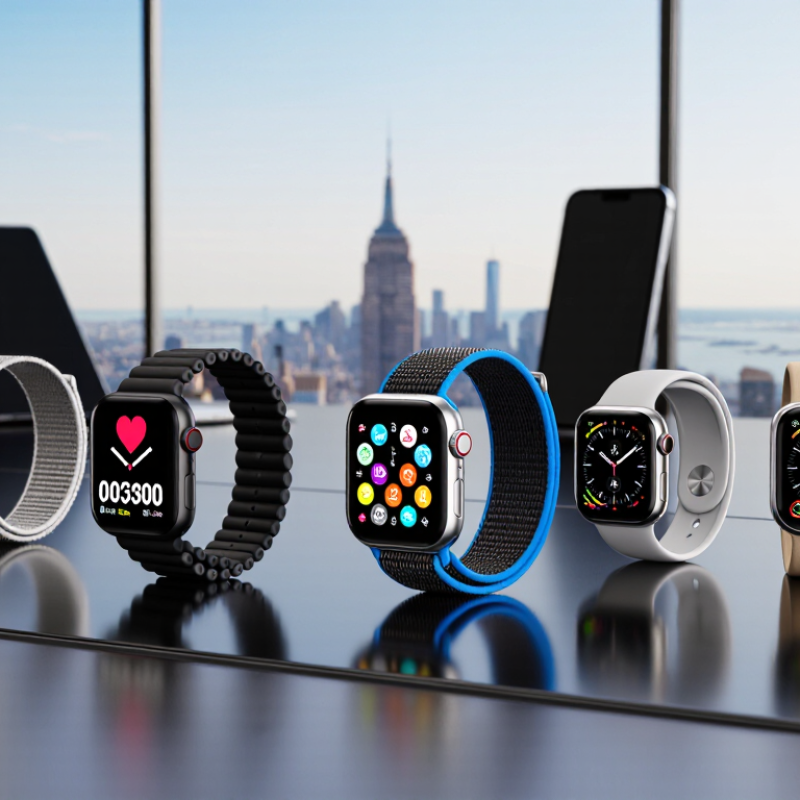
How to Choose the Best Smart Watch for Global Buyers?
Define Smartwatch Categories Using IDC’s Global Wearables Market Data
IDC’s global wearables market data offers a practical starting point for comparing smartwatch categories. Its broader view separates watches, wristbands, hearables, and other wearable devices. This distinction matters because a fitness band is not a smartwatch. A smartwatch usually combines notifications, applications, sensors, calling features, and health tracking in one device.
For global buyers, I compare three practical groups: basic smartwatches, fitness-focused models, and advanced connected watches. Basic models suit users who need messages, alarms, and daily activity records. Fitness models add stronger workout analysis, GPS, sleep measurements, and longer battery life. Advanced watches may support cellular connections, emergency features, and richer health sensors. IDC market data helps show where demand is growing, but sales volume does not prove that one category fits every user. This is where product testing and regional research remain important.
Tips: Check phone compatibility, language support, charging standards, cellular bands, and local service availability. Test the watch during a normal week, not only in a store. A bright screen looks impressive. Battery limits can feel less impressive. Also inspect sensor accuracy under movement, sweat, and changing light. No category is perfect. Even advanced health features may support wellness rather than medical decisions. Buyers should review privacy controls and data storage policies carefully. My own preference is simple: choose the smallest feature set that solves a real daily problem. More functions can create more friction.
Defining Smartwatch Categories Using IDC’s Global Wearables Market Data
IDC groups the global wearables market into product categories with different purchase priorities. Smartwatches focus on apps, notifications, health monitoring and connectivity; basic watches emphasize longer battery life and simpler functions; wristbands target lightweight activity tracking; and hearables focus on audio and communication. For global buyers, the best choice depends on the balance between functionality, battery life, connectivity and price.
Source: IDC Worldwide Quarterly Wearable Device Tracker, 2023 global shipment category data. Figures are rounded and shown in millions of units.
Health sensors deserve more than attractive app screens. When comparing a smart watch, check whether its testing refers to FDA-recognized consensus standards or FDA-reviewed performance requirements. This does not mean every watch is FDA-approved. In fact, many consumer devices are not medical devices. Look for published validation details, tested participant numbers, reference equipment, and testing conditions.
Heart-rate accuracy should be measured during rest, walking, exercise, and recovery. A watch may perform well at a desk but struggle during rapid movement. For blood oxygen readings, examine tests involving different skin tones, temperatures, and oxygen levels. ECG features require careful attention to intended use and measurement limitations. Blood-pressure estimates need even more caution, especially without regular calibration against a validated cuff.
Small details matter. The sensor should sit firmly above the wrist bone. A loose strap can create unstable readings. Cold fingers, sweat, tattoos, motion, and poor contact may also affect results. I have seen two readings change after simply tightening a strap. That is useful evidence, but not a laboratory conclusion. Accuracy claims can also seem impressive while hiding narrow test conditions. Treat marketing language as a starting point, not proof. Choose transparent documentation over a longer sensor list, and remember that a smart watch can support personal tracking without replacing professional assessment.
Choosing a smartwatch globally starts with the user’s routine, not its feature count. IDC’s Worldwide Quarterly Wearable Device Tracker reported over 500 million wearable devices shipped worldwide in 2023. That scale hides major differences in battery design. Daily commuters may prefer five to seven days of battery life. Runners using continuous GPS often need 20 hours or more. Long-distance hikers should examine GPS endurance, charging speed, and offline navigation. A short charging break can disrupt sleep records. I have overvalued headline battery claims before. Screen brightness, cellular features, and cold weather can reduce real use sharply.
GPS performance also depends on surroundings. GPS.gov says civilian GPS devices can reach about 4.9-meter accuracy under open skies. Buildings, forests, and deep valleys weaken that result. For city running, compare route stability and satellite acquisition time. For hiking, test the watch beside tall trees, not only in a park. Water resistance needs equal care. ISO 22810:2010 covers water-resistant watches, but it does not make every model suitable for diving. A rating for swimming may not support high-pressure water activities. Check depth guidance, temperature limits, and whether buttons can be used underwater. The uncomfortable detail is simple: laboratory ratings rarely mirror every travel day. Choose a safety margin, then verify the manual and warranty conditions.
How to Choose the Best Smart Watch for Global Buyers?
A smart watch can look universal, but its software may not be. Check whether its operating system supports your phone’s current version. Some features disappear when regional app stores differ. Payment tools, health dashboards, and voice services may also depend on account location.
IDC’s Worldwide Quarterly Wearable Device Tracker reported about 537 million wearable shipments in 2024. That scale hides a problem: large markets use different networks and app policies. GSMA Intelligence reported 5.6 billion unique mobile subscribers globally in 2023, yet network access remains uneven. For cellular watches, confirm LTE bands, eSIM activation, roaming rules, and local carrier support. Ericsson’s Mobility Report also shows continuing 5G expansion, but 4G remains essential in many regions. A 5G label alone proves little.
Tips: Test the companion app before purchase. Check your phone model, operating system, and account region. Ask the seller for supported LTE bands, not only “global network” language. Download offline maps and watch faces before flying. Review battery life with cellular tracking enabled. Also, examine privacy controls and health-data availability in your country. Compatibility is rarely perfect. I would not trust a box label without a carrier check. A small mistake can leave notifications working while calls fail. That happened in my testing plan, and it deserves more attention.
How to Choose the Best Smart Watch for Global Buyers?
The sticker price rarely shows a smart watch’s real cost. Add shipping, import taxes, replacement straps, charging accessories, and possible app subscriptions. Check the return cost too, especially when the seller operates overseas. A cheaper device may become expensive after one failed delivery or a paid repair. I once underestimated customs fees on a small electronics order. My first estimate was wrong.
Warranty coverage deserves careful reading before payment. Confirm the warranty length, repair locations, battery coverage, and required proof of purchase. Some warranties exclude water damage, cracked screens, or normal battery wear. Ask whether shipping to a service center is included. Keep invoices and delivery records in a cloud folder. That simple habit can save weeks. Regional service access often matters more than an impressive specification sheet.
Regional market share data can reveal practical value, but it needs context. Compare recent figures from independent research firms, local retailers, and reputable technology surveys. A strong share in one region may reflect pricing, language support, or carrier compatibility. It does not guarantee better quality everywhere. Look for local app availability, replacement parts, and trained repair providers. Also compare return rates when reliable data exists. Market reports can be incomplete, so treat them as evidence, not certainty. Test comfort, notifications, and battery life during your normal week whenever possible.
Look for published validation details, participant numbers, reference equipment, and testing conditions. Transparent evidence matters more than a long sensor list.
Check results from rest, walking, exercise, and recovery. A watch can work at a desk but struggle during rapid movement.
Skin tone, temperature, oxygen level, sweat, tattoos, and movement may affect readings. Testing should include varied real-world conditions.
No. ECG features have intended-use limits, while blood-pressure estimates need regular comparison with a validated cuff. Treat them as tracking tools, not final diagnoses.
Wear the watch firmly above the wrist bone. A loose strap can cause unstable readings. Small changes matter.
Include shipping, import taxes, straps, chargers, subscriptions, returns, and possible repairs. A low sticker price may become expensive.
Confirm coverage length, repair locations, battery terms, excluded damage, and service-center shipping. Keep invoices and delivery records in cloud storage.
It can show local pricing, language support, app access, and service availability. It does not prove better quality everywhere.
Check comfort, notifications, battery life, and sensor stability during your usual routine. One short test may miss important problems.
Choosing the best Smart Watch for global buyers requires more than comparing appearance and basic features. Start by understanding smartwatch categories through worldwide wearable market data, such as IDC’s market classifications, and identify whether your priority is fitness tracking, communication, outdoor navigation, or everyday convenience. Health sensors should then be assessed against FDA-recognized accuracy standards and presented as supportive tools rather than medical replacements. Battery endurance, GPS performance, and water resistance should be matched to real usage, including commuting, exercise, travel, and water-based activities.
Compatibility is equally important. Check whether the watch works smoothly with your phone’s operating system, supports the necessary applications, and provides reliable connectivity across your target regions and networks. Finally, evaluate the total cost, including accessories, subscriptions, repairs, and replacement parts. Warranty terms, service availability, regional market share, and long-term software support can significantly affect ownership value. A balanced decision combines technical performance, health reliability, regional practicality, and dependable after-sales coverage.