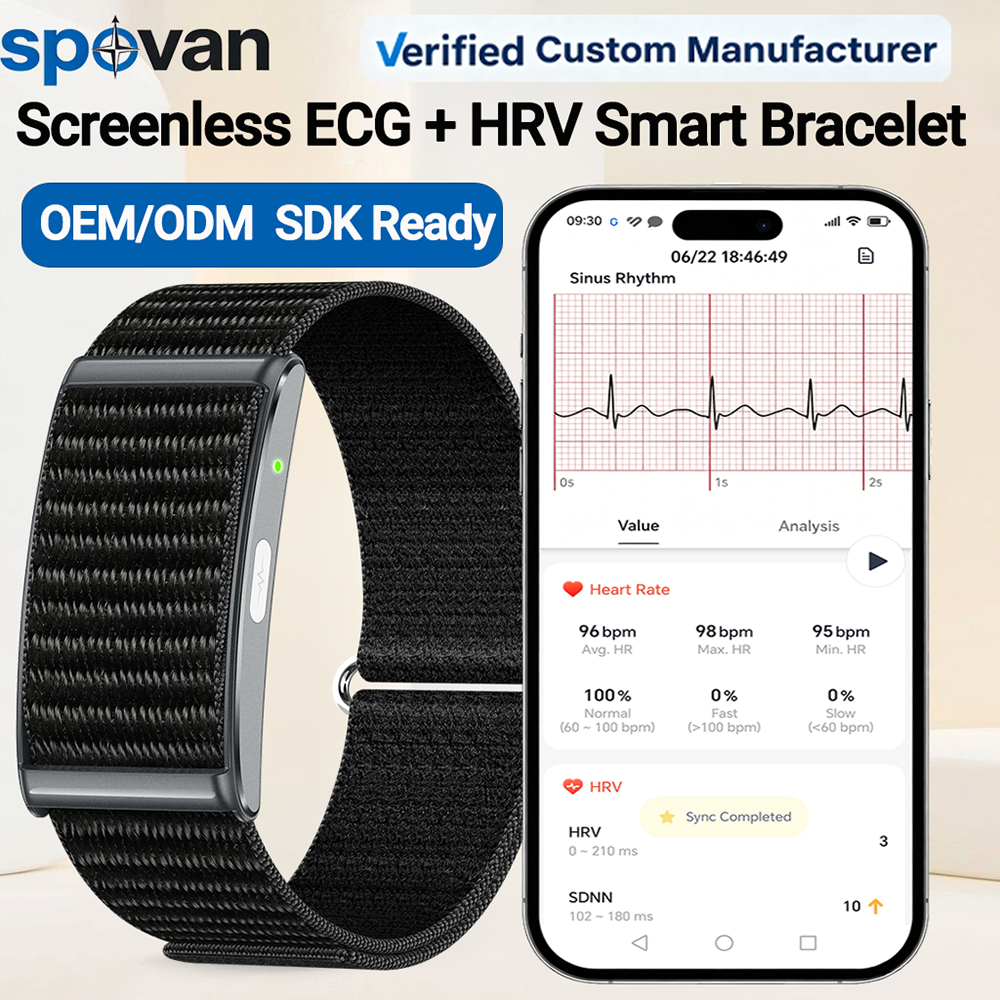
ECG+HRV
IP68 Seal
Open SDK
Explore our field-proven smart wearables engineered with medical-grade micro-thermistors, high-sensitivity optical arrays, low-power ARM Cortex-M processors, and open SDK ecosystems.
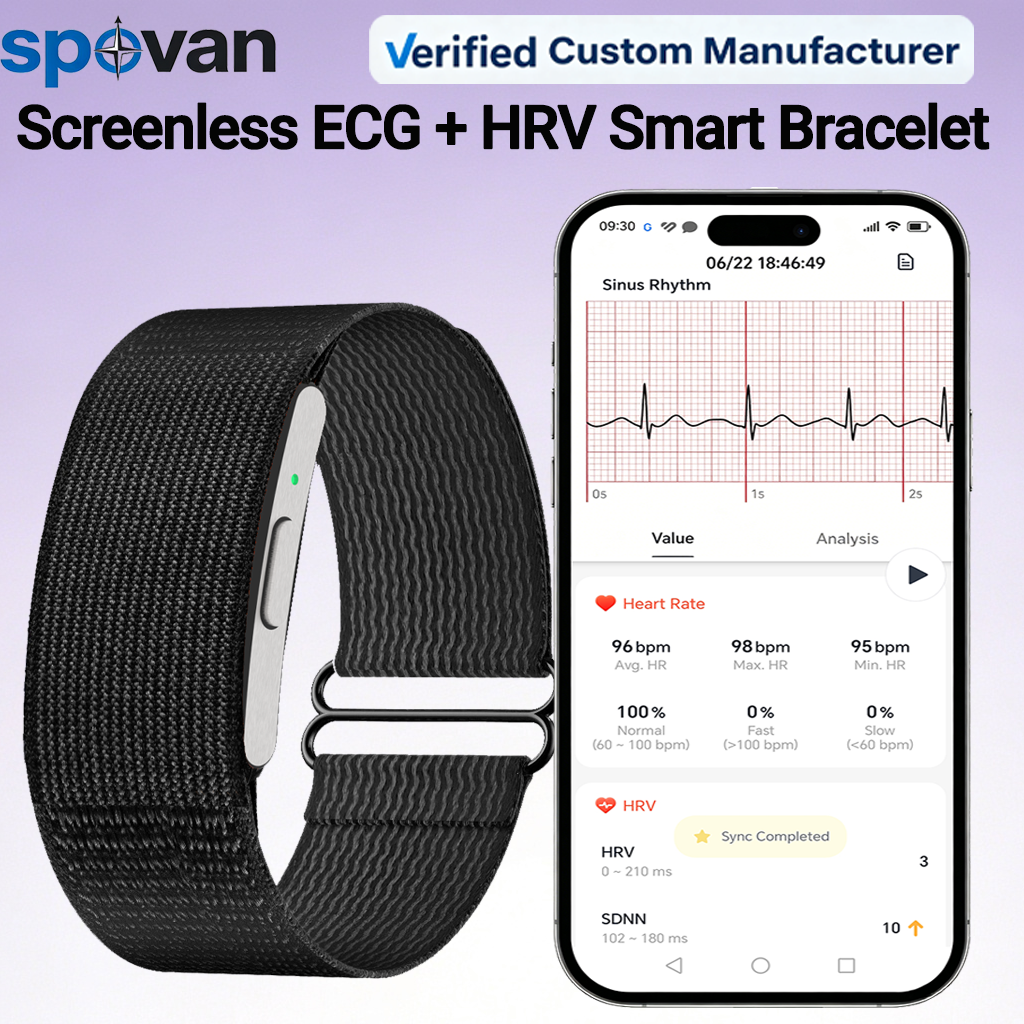
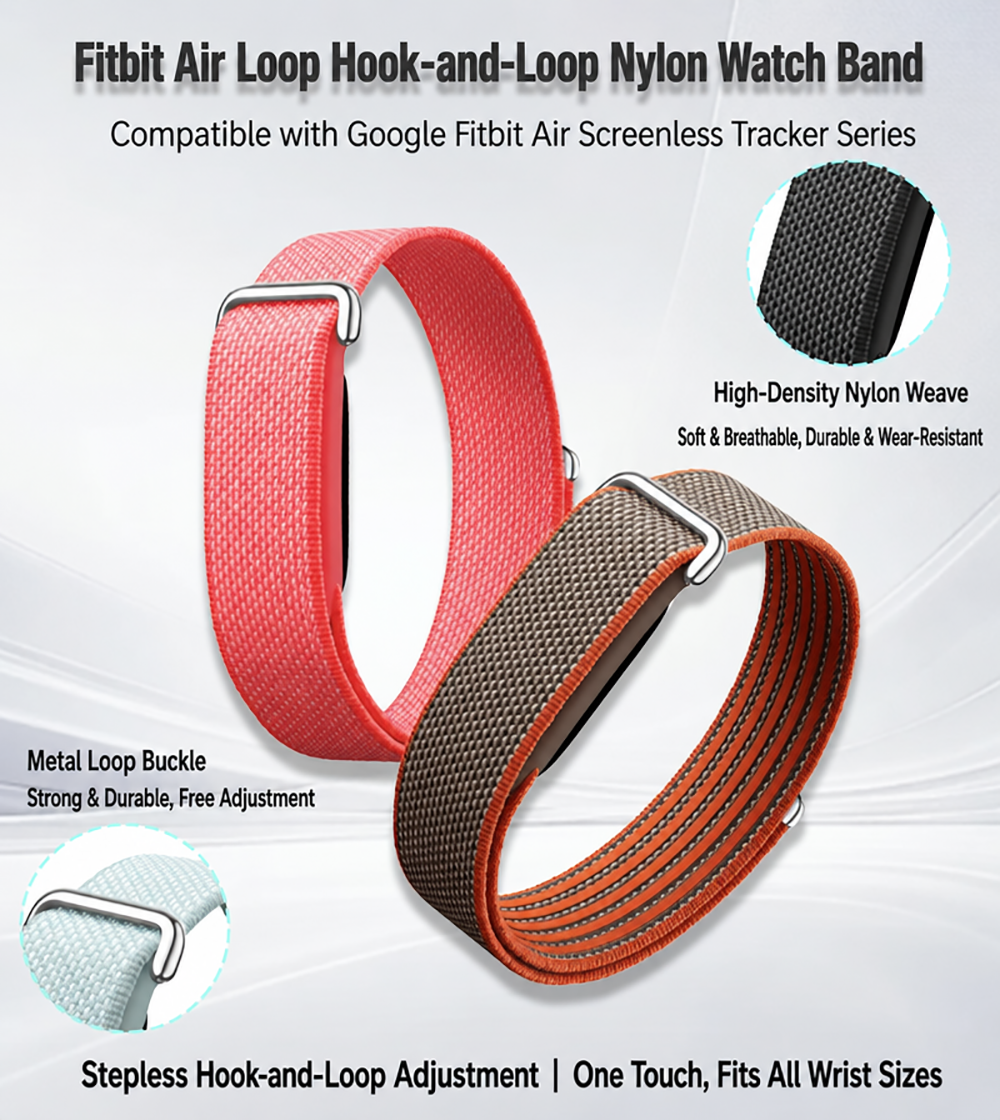
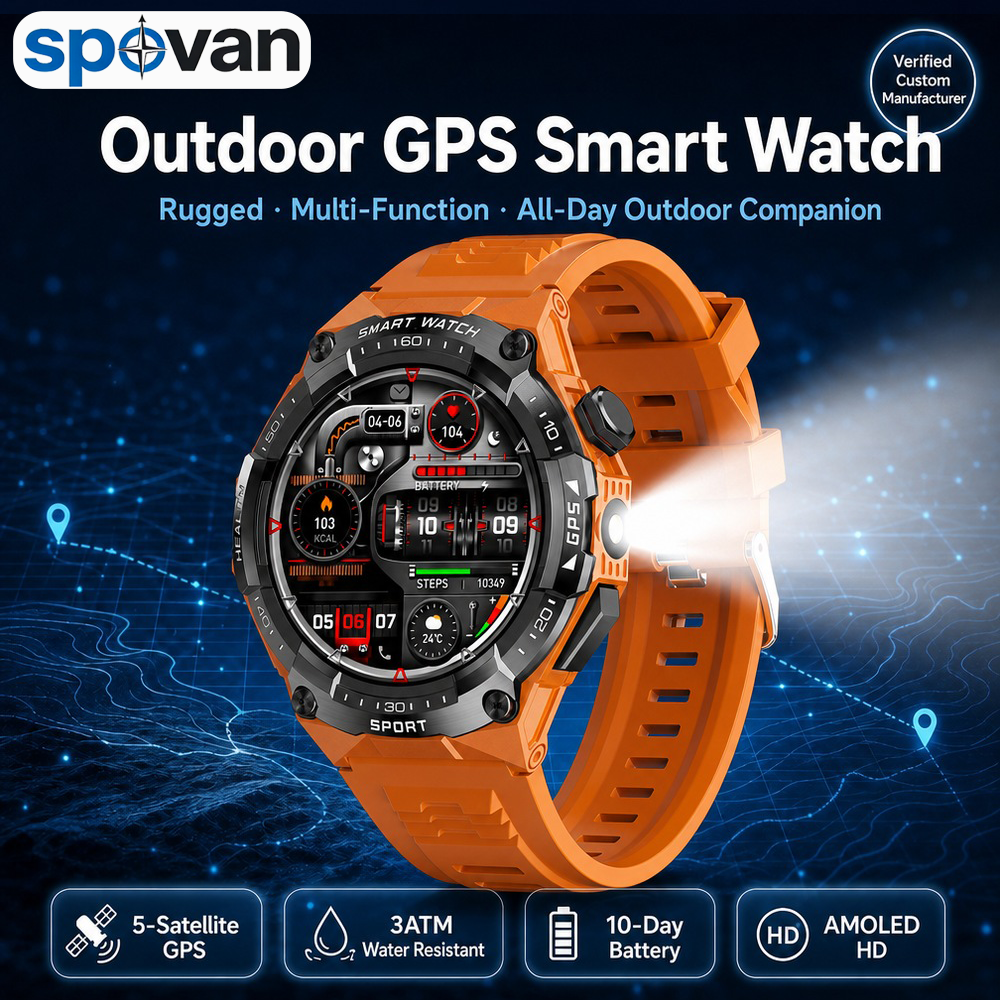
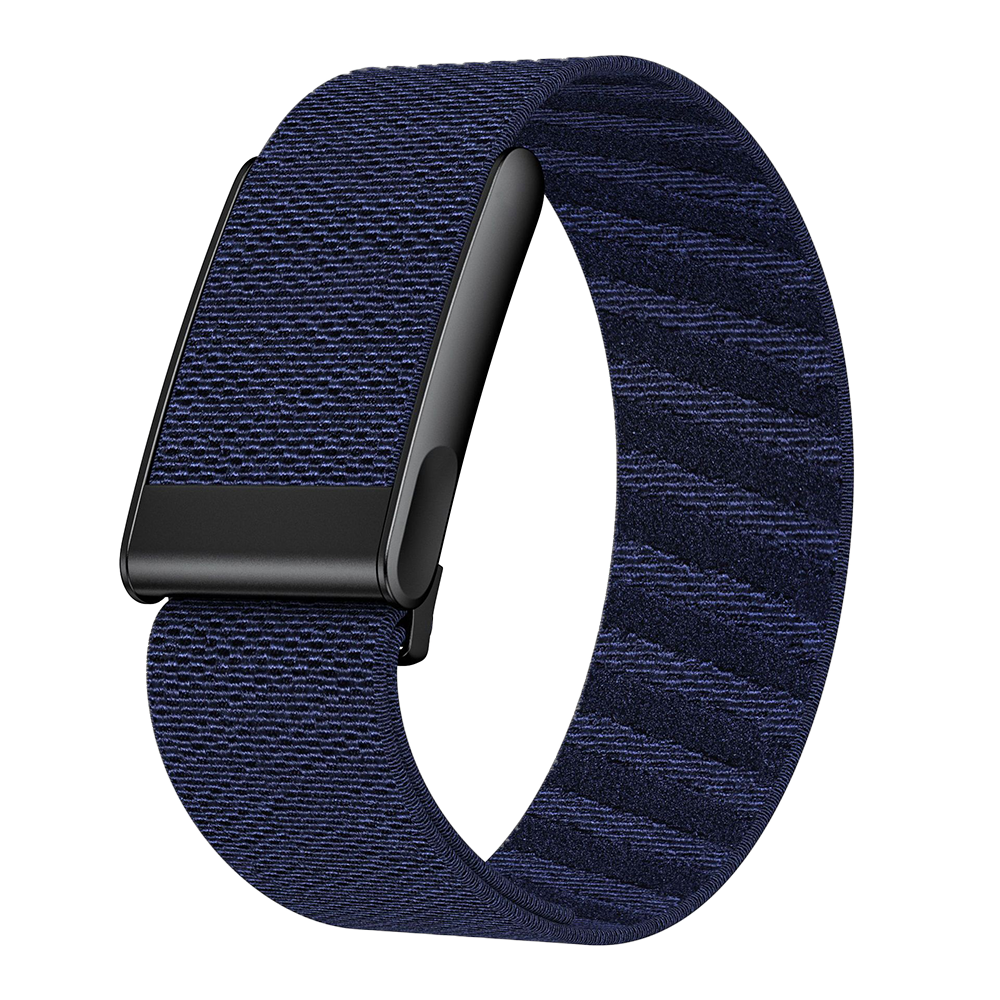
Moving from crude skin-surface thermistors to medical-reference core body temperature estimation requires sophisticated sensor isolation, dual-heat-flux telemetry, and multi-variable ambient compensation.
High-precision negative temperature coefficient (NTC) ceramic resistors with medical tolerance (±0.05°C). Placed in direct contact with skin via stainless steel or titanium alloy thermal transfer studs, thermally decoupled from the internal PCB battery heat sink.
Non-contact MEMS thermopile arrays measuring Stefan-Boltzmann radiant thermal flux. Eliminates galvanic skin resistance anomalies and perspiration-induced heat sinking, delivering repeatable surface temperature metrics across diverse ambient humidity profiles.
The gold standard in non-invasive core temperature monitoring. Employs dual temperature sensors separated by a calibrated thermal resistance barrier to calculate real-time metabolic heat dissipation vector, feeding proprietary Kalman-filter firmware.
| Architecture Type | Sensor Component | Typical Accuracy | Power Draw | Tooling & Thermal Isolation | Primary Application |
|---|---|---|---|---|---|
| Single NTC Skin-Conduction | Epoxy-coated NTC 100kΩ (B=3950K) | ±0.2°C (steady state) | ~8 µA | Suspended SUS316L electrode probe | Consumer fitness, general wellness |
| Differential Contact (Skin + Shell) | Dual digital I2C temperature ICs | ±0.1°C (calibrated) | ~35 µA | Aerogel insulation barrier between ICs | Circadian rhythm & ovulation tracking |
| MEMS Infrared Thermopile | Micro-thermopile with IR bandpass | ±0.15°C (contact/radiant) | ~120 µA | Germanium or silicon optical lens | Rapid on-demand fever screening |
| Dual-Heat-Flux Array | Precision thermopile + NTC + Heat-flux bridge | ±0.08°C (vs. core reference) | ~65 µA | Complex multi-cavity co-molding | Telehealth RPM, clinical triage, worker safety |
Strategic buyers are pivoting away from generic consumer gadgets toward high-fidelity continuous biosensing nodes that unlock predictable software-as-a-service (SaaS) and telehealth revenues.
B2B procurement is transitioning from static fever alerts to continuous 24/7 nocturnal skin temperature baseline profiling. Minute temperature shifts (0.3°C–0.5°C) precede systemic immune responses, sepsis onset, viral infections, and hormonal cycles, making smartwatches pivotal edge-nodes for decentralized Clinical Research Organizations (CROs) and Remote Patient Monitoring (RPM).
Thermal sensors are increasingly co-located inside the optical PPG aperture. By combining multi-spectral photoplethysmography (green, red, infrared) with real-time epidermal thermal telemetry, microcontrollers dynamically calibrate peripheral vascular vasoconstriction and vasodilation artifacts, drastically improving blood pressure trend and SpO2 accuracy during dynamic workouts.
Tier-1 medical platforms and regional insurance networks refuse proprietary consumer walled gardens. Procurement criteria now mandate native Bluetooth Low Energy (BLE 5.2/5.3) GATT raw service UUIDs, encrypted JSON payloads, and uninhibited iOS/Android native SDK libraries that deliver raw uncurated sensor streams directly to proprietary hospital databases.
Next-generation body temperature platforms utilize sub-threshold microcontrollers fabricated on 22nm low-power nodes. Integrated System-in-Package modules incorporate thermal energy harvesting (TEG) components utilizing the Seebeck effect—converting the thermal delta between human skin and ambient air into auxiliary micro-currents to extend standby cycles past 30 days.
Importers in the EU and North America are mandating hardware baseline compliance with MDR (EU) 2017/745 Class IIa and FDA 510(k) biometric safety rules before placing mass tooling orders. OEM factories that provide certified ISO 10993 biocompatibility testing, RoHS/REACH material certificates, and verified factory quality audits reduce time-to-market by 12 to 18 months.
Heavy industrial sectors—including mining, logistics, construction, and smelting—are driving massive B2B orders for ruggedized, intrinsically safe smartwatches with integrated thermal stress alerts. Real-time Wet Bulb Globe Temperature (WBGT) estimation protects lone workers against hyperthermia and physiological collapse in extreme working conditions.
Established in 2010 and exporting precision smart wearables since 2012, Shenzhen Honsys Technology Co., Ltd. merges tier-1 SMT production lines with verified trade transparency and deep embedded engineering expertise.
On-site evaluated and verified by SGS Group. Fully compliant with FCC, CE, RoHS directives, alongside registered EPR compliance frameworks for Germany and France.
We provide complete C-level embedded APIs, native iOS CoreBluetooth, Android BLE SDKs, and full GATT UUID documentation for seamless cloud telehealth platform integration.
Every single unit undergoes raw material IQC, automatic optical SMT inspection, ultrasonic casing sealing, vacuum waterproof chamber leakage tests, and temperature chamber calibration.
Standard volume production shipped in approximately 30 days FOB Shenzhen / Yantian / Hong Kong. Flexible incoterms supporting EXW, CIF, DDP, and multimodal global express logistics.
Actionable answers prepared by our sales engineering and firmware teams to streamline procurement due diligence and technical feasibility verification.
Our firmware implements dynamic dual-channel compensation. One thermal channel monitors the epidermis via an isolated medical-grade conductive stud; the second internal channel monitors ambient shell temperatures. A recursive Kalman filter recalculates heat-loss gradients, canceling out cold ambient breezes and indoor HVAC shifts.
For functional evaluation and software SDK integration, sample quantities start from 1 to 10 units. Custom private labeling (housing laser logo, startup boot animation, custom gift box) typically starts at 500 to 1,000 units. Full ODM structural tooling and bespoke firmware feature sets are evaluated per project scope.
Yes. We supply open SDK/API protocols for iOS and Android, as well as comprehensive BLE GATT service table documentation. You have unrestricted access to raw ADC temperature values, calibrated Celsius/Fahrenheit integers, timestamps, and optical PPG waveforms without passing through any third-party proprietary cloud servers.
Integrating metal contact pins into polymer or zinc-alloy cases requires precision insert-injection molding and automated dispensing of double-cured structural cyanoacrylate and silicon gaskets. Every manufactured chassis is subjected to 100% vacuum-decay pressure leakage testing on automated test benches before board assembly.
Our standard hardware models are manufactured as high-accuracy wellness, sports, and vital monitoring instruments. While they achieve physiological-grade thermal repeatabilities, clients seeking to market devices under FDA Class II (510k) or EU MDR Class IIa must submit the device for clinical validation under their own brand registry—for which Honsys provides comprehensive technical design dossiers.
Shenzhen Honsys provides a comprehensive 1-year factory warranty on all mass-produced smartwatches. Our historical factory RMA rate remains verified under 0.3%. Defective hardware is replaced via spare unit allocations shipped alongside bulk cargo, or credited on subsequent PO cycles.
Consult directly with our Shenzhen engineering specialists. Request engineering samples, review open SDK documentation, or obtain competitive B2B volume quotations tailored to your regional compliance mandates.
Contact Us