ECG + SpO2
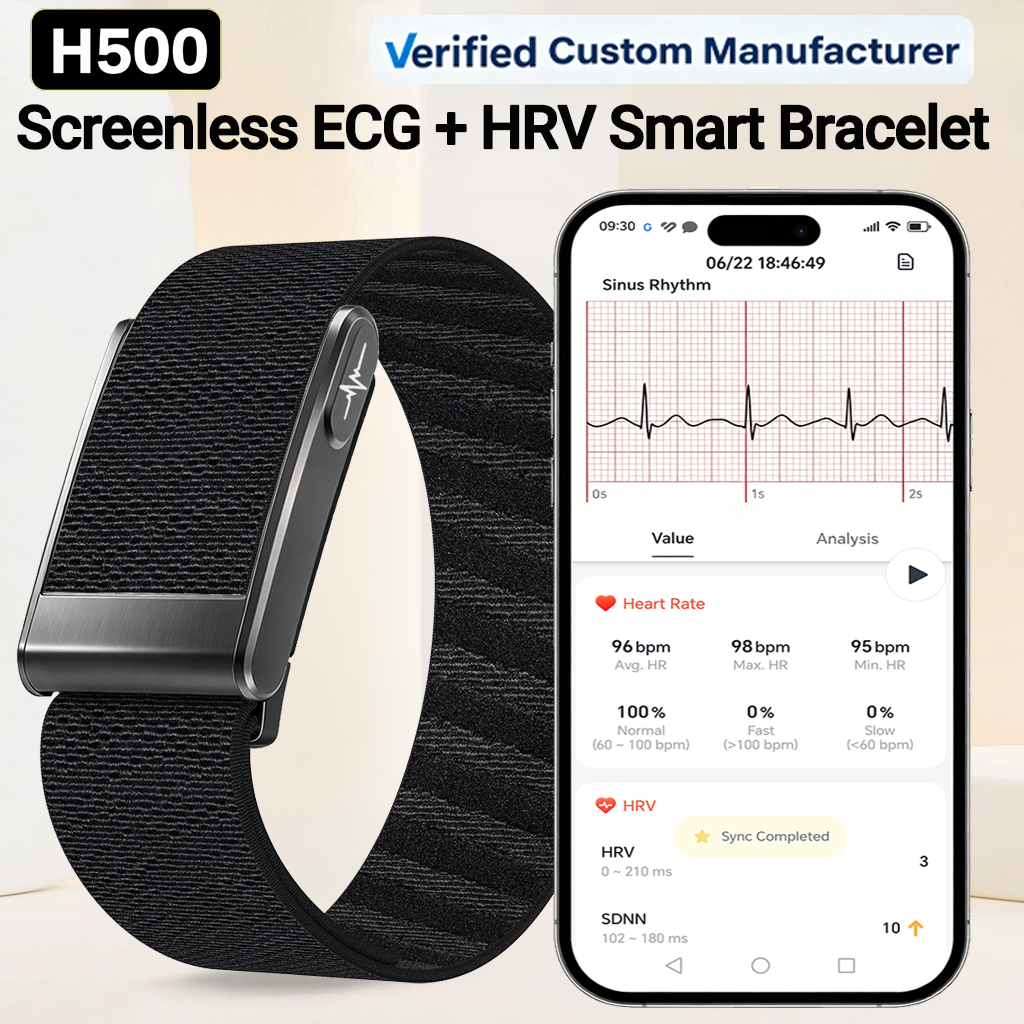
Factory-engineered wearable hardware featuring calibrated red and infrared optical emitter-detector arrays, open Bluetooth SDKs, rugged IP68 enclosures, and low-power multi-core DSP architectures.
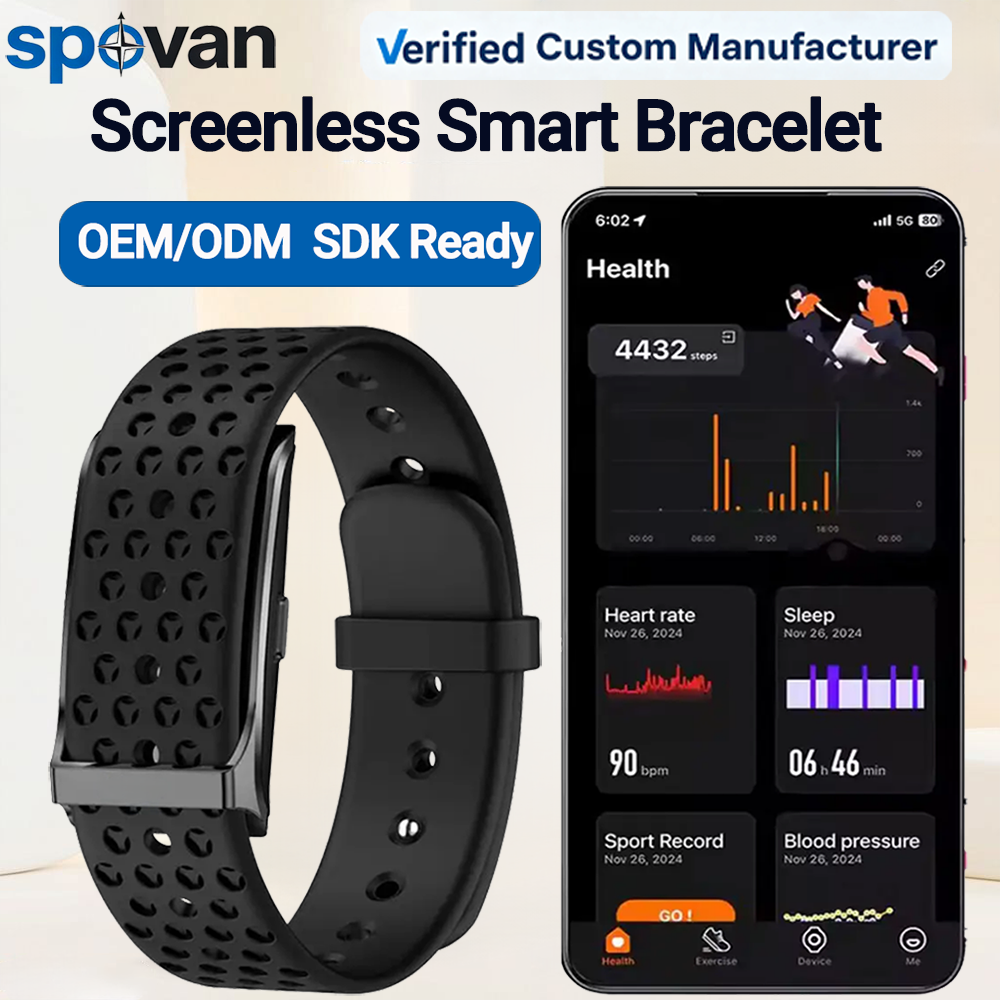
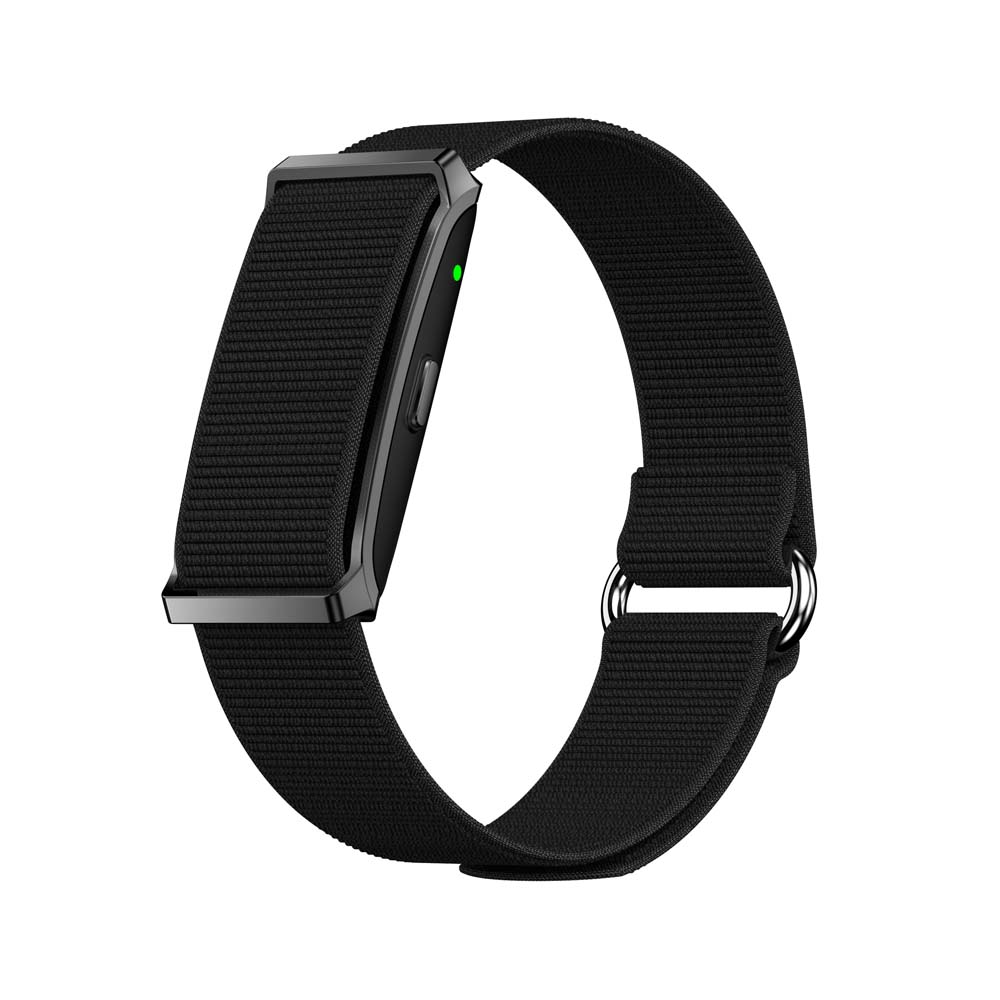
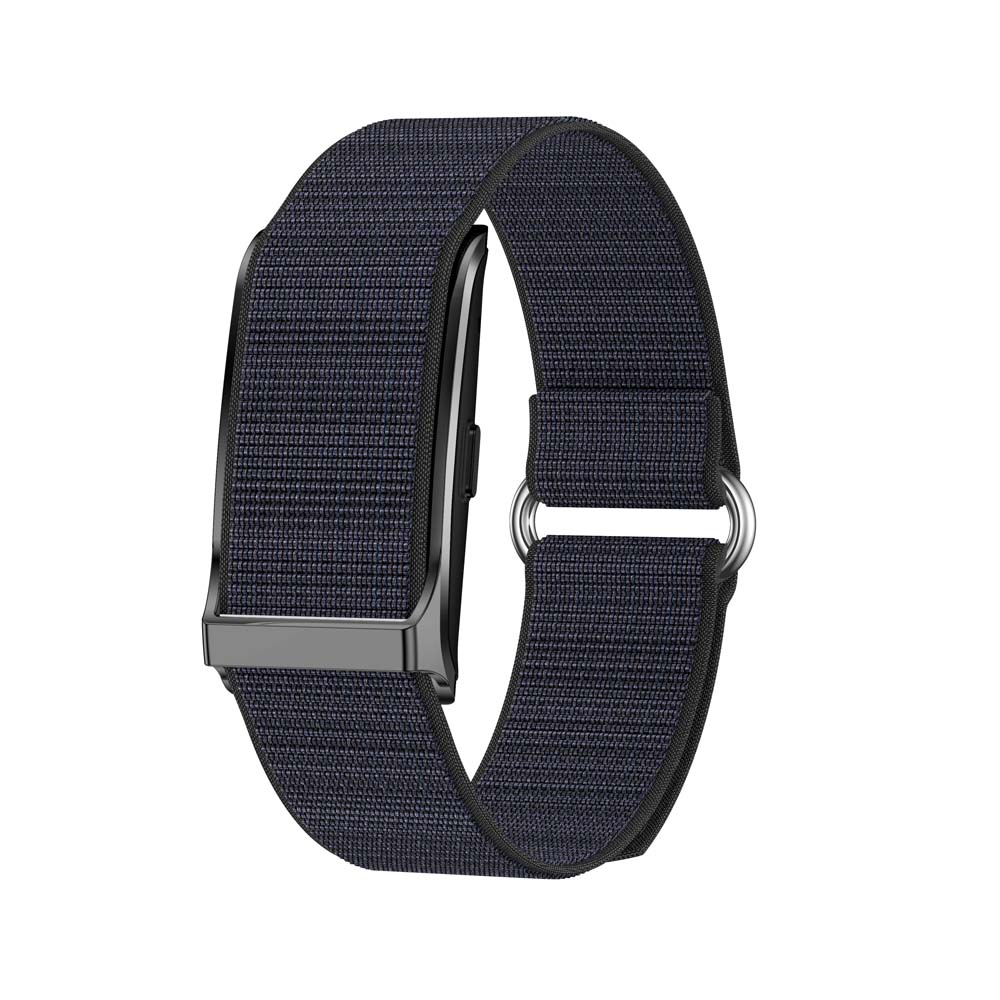
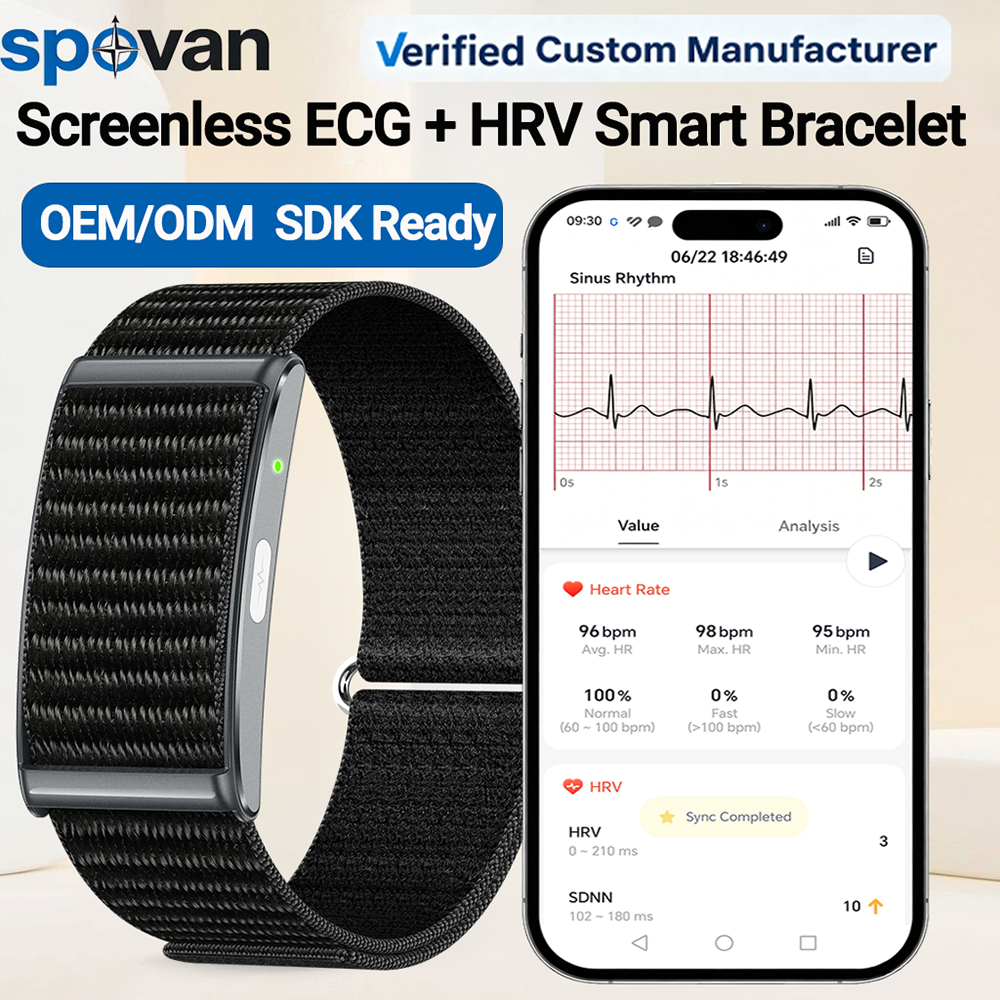
Continuous non-invasive peripheral capillary oxygen saturation (SpO2) monitoring in modern micro-wearables relies fundamentally on the principles of spectrophotometry and photoplethysmography (PPG). Blood oxygen saturation is defined mathematically as the ratio of oxygenated hemoglobin ($HbO_2$) relative to the sum total concentration of functional hemoglobin ($HbO_2 + Hb$). Deoxygenated and oxygenated hemoglobin exhibit radically diverging optical absorption extinction coefficients across narrow light wavelengths. As specialized manufacturers based in Shenzhen's hardware innovation epicenter, our optical arrays utilize high-lumen dual-wavelength surface-mount LEDs—principally operating at 660 nm (Red spectrum) and 910–940 nm (Infrared spectrum).
In hospital-grade clip oximeters, transmission photoplethysmography is the gold standard because light passes directly through thin tissue barriers such as the finger pad or earlobe. However, in smartwatches, fitness bands, and screenless wellness straps, engineering teams must implement reflective photoplethysmography, measuring the backscattered photons redirected from the subcutaneous capillary beds through the radial artery network. Reflective optical topologies require precisely designed optical isolation barriers between the photodiode (PD) detector and the dual LED emitters to prevent internal lens reflection and optical crosstalk. Our automated factory tooling integrates custom CNC light baffle rings and optical grade epoxy resin sealing to guarantee that >98% of received optical photons have traveled deep into vascularized dermis tissues.
Current commercial iterations manufactured at our Shenzhen facilities integrate green light (525 nm) for high-frequency resting and active heart rate (due to maximal absorption by oxyhemoglobin) while dynamically switching to alternating red (660 nm) and infrared (940 nm) pulsing modes at 25 Hz to 100 Hz during nocturnal cycles. This multi-spectral operational architecture prevents excessive battery drain, empowering our screenless trackers to provide up to 14 days of autonomous physiological data logging on a single 150 mAh pouch cell without requiring daily charging cycles.
| Evaluation Parameter | Standard Low-Tier Smartwatch | Honsys Medical-Reference Tier SpO2 Watch | Screenless Bio-Telemetry Band |
|---|---|---|---|
| Optical Topology | Single Green LED + Dual PD | Dual Red (660nm) + Dual IR (940nm) + Green Array | Multi-Channel Reflection Array + Isolated Baffle |
| Motion Artifact Mitigation | Basic FIR Threshold Filter | Adaptive Kalman Filtering + 3-Axis IMU Fusion | Sub-Dermal Wavelet Transform DSP |
| SpO2 Measurement Range | 80% – 100% (Static Wrist Only) | 70% – 100% (±2% RMS Accuracy in Static State) | Continuous Nocturnal Micro-Desaturation Profiling |
| OS & Telemetry Interface | Closed Proprietary App Only | Open BLE SDK / Raw Sensor Data Pipe (PPG+ECG) | Native MQTT / RESTful Cloud API Integrations |
| Battery Consumption | 1 – 2 Days (Color Display Load) | 5 – 7 Days (AMOLED Screen Engine) | 10 – 16 Days (Digital Detox Ultra-Low Quiescent Current) |
Critical strategic shifts global importers, health insurers, fitness device brands, and institutional procurement teams must navigate during the 2025–2030 sourcing cycles.
Global demand is pivoting aggressively from occasional spot-check oxygen saturation testing toward non-invasive nocturnal hypopnea-apnea indexing. B2B buyers now mandate firmware equipped with automated Oxygen Desaturation Index (ODI3 / ODI4) algorithms capable of flagging recurrent arterial desaturations below 90% during REM phases, bridging consumer electronics with preventative respiratory health.
Driven by screen fatigue and digital-detox lifestyles, corporate wellness platforms and elite athletic teams increasingly purchase display-free bands. Removing the screen mitigates display damage liabilities, slashes BOM costs, maximizes sub-dermal battery capacity, and ensures continuous physiological compliance without distracting push notifications.
Standalone SpO2 monitors are fast becoming obsolete in premium tiers. Future procurement specifications require single-chip multi-modal analog front ends (AFEs) synchronizing 512 Hz electrocardiogram voltage traces, dual-wavelength oxygenation waveforms, autonomic nervous system Heart Rate Variability (HRV), and electrodermal stress indicators into unified biophysical models.
Healthcare SaaS providers, clinical trial groups, and decentralized telemetry institutions refuse walled-garden consumer ecosystems. Successful OEM suppliers must furnish comprehensive Bluetooth LE Core specification profiles, open Android/iOS SDKs, and transparent access to uncompressed photoplethysmogram ADC output values for proprietary cloud-based machine learning training.
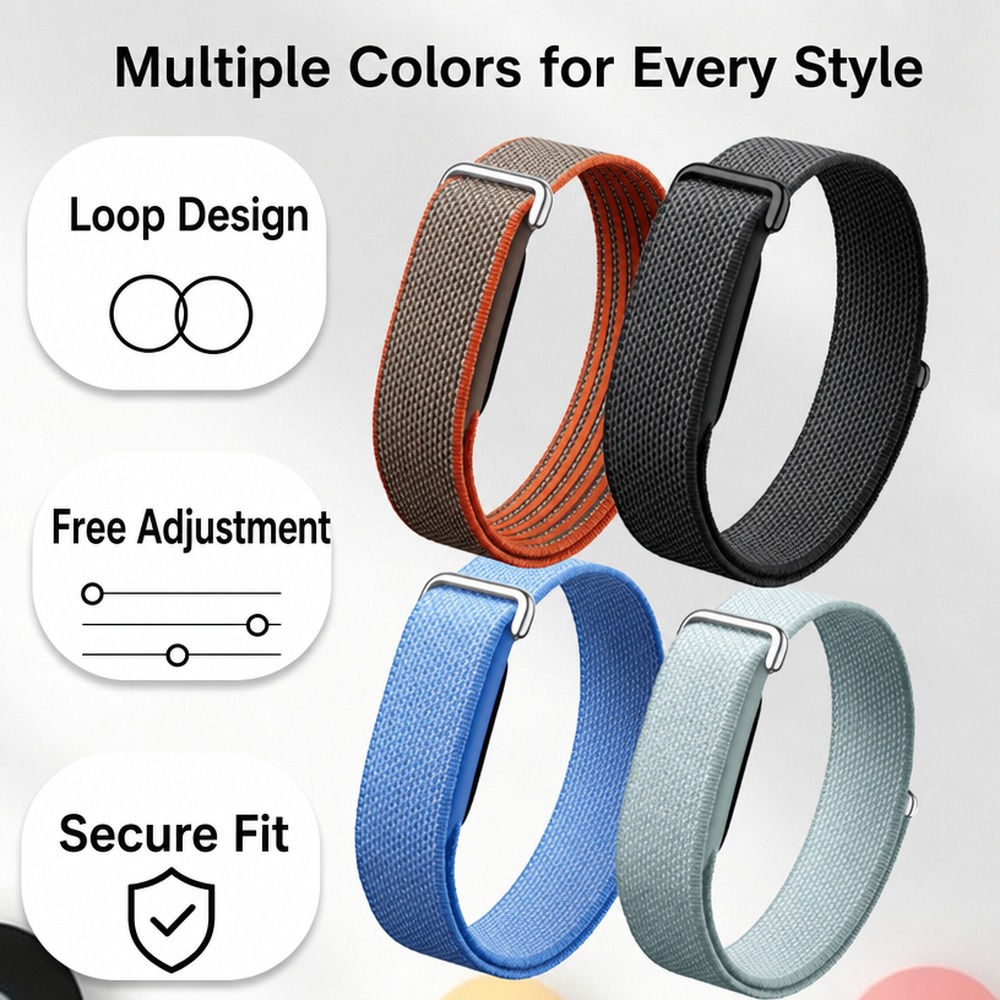
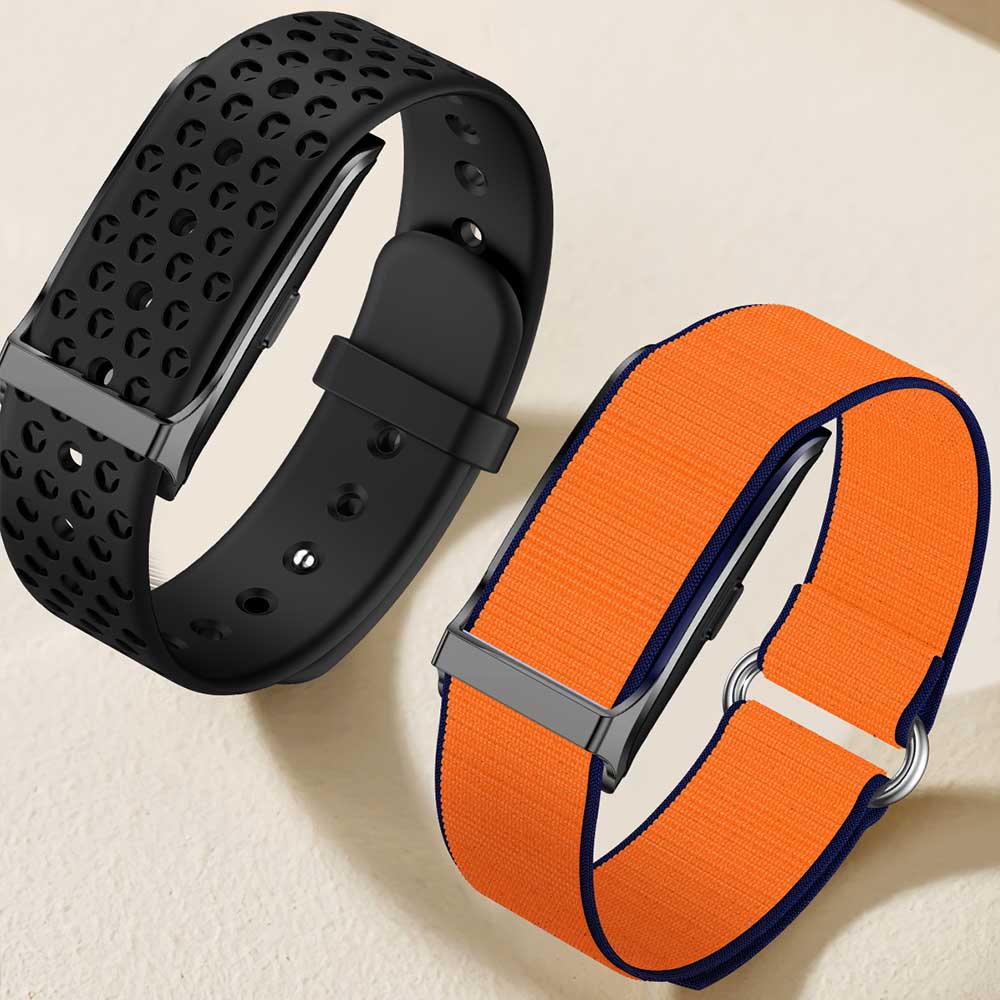
With SpO2 monitoring necessitating snug, 24/7 cutaneous contact to prevent ambient illumination leakage, skin contact dermatological liabilities have surfaced. The market has rapidly migrated toward breathable micro-loop nylon weave systems and medical-grade fluoroelastomers compliance-verified against ISO 10993 cytotoxicity and sensitization protocols.
The core photonic engineering developed for smartwatches is dispersing into compact ring-form form factors, smart eyewear, and hearing wearable devices. Sourcing officers are capitalizing on shared R&D toolchains, utilizing identical Bluetooth controllers, firmware kernels, and optical DSP subroutines across varied physical formats to minimize total product lifecycle expenditure.
A deep dive into our verified manufacturing credentials, precision engineering facilities, and supply-chain governance audited directly in Shenzhen, China.
Founded in 2010 with direct foreign export operations maintained since 2012. Over 15 years specializing exclusively in high-precision biomedical wearable design.
Physical factory, SMT soldering, assembly, and testing lines fully inspected and authenticated on-site by SGS Group. Certified Verified Custom Manufacturer status.
Secured with 4 independent product design patents and registered trademark portfolios, shielding our international OEM partners from intellectual property disputes.
Comprehensive Declarations of Conformity, full FCC (USA), CE (Europe), RoHS environmental compliance, and complete EPR registrations for Germany and France.
Every sealed production unit is subjected to dedicated pneumatic air-pressure decay and hydrostatic chamber testing to guarantee true IP68/3ATM waterproof integrity.
Full spectrum development: tooling engineering, private mold development, laser marking, bespoke UI styling, customized boot animations, and retail packaging packaging.
Streamlined SMT scheduling and local component partner warehousing in Shenzhen provide reliable bulk order shipments within ~30 days FOB Yantian/Shenzhen/Hong Kong.
100% pre-shipment quality inspection accompanied by our institutional 12-month manufacturer warranty and dedicated English-speaking engineering post-sales support.
Straightforward, technically rigorous answers addressing regulatory boundaries, calibration, SDK pipelines, and order terms.
Initiate direct communication with Shenzhen Honsys Technology's engineering and trade division. Receive complete data sheets, raw SDK parameters, and precise wholesale quotes within one business day.
Contact Us